Volgende
3 Bekeken · 17/05/17
5 Bekeken · 17/11/17
3 Bekeken · 17/11/19
7 Bekeken · 22/04/09
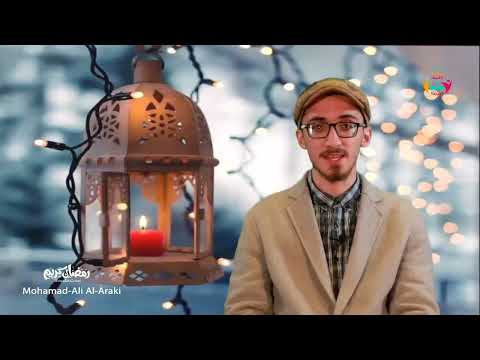
2017 Ramadan Program
0
0
11 Bekeken·
24/03/22
Follow Muslim Youth Connection on social media:
YouTube https://www.youtube.com/mycmedia
Facebook https://www.facebook.com/muslimyouthconnection
Instagram https://www.instagram.com/mycmedia
Twitter https://twitter.com/_mycmedia
_____________________________________________________________
Website: http://www.myconline.org
Donate via PayPal: https://www.paypal.com/donate/?token=YjcrKU8qzkt2CrqE_MN7xHQE_gwJ_HFRWQ-wcz_-sTxIxSCGeO_W2Or83dnB3zLJHu4Odm&country.x=US&locale.x=US
Laat meer zien
Transcript
[0:44]Muhamadous.
[0:49][Music] [Music] [Music] Muhammad.
[1:19]for [Music] [Music] [Music] [Music] him.
[1:58]forham.
[2:03][Music] [Music] My dear brothers and sisters, last night as we continued
[2:34]with our discussion about this uh personality who is mentioned in the
[2:41]holy Quran in surah whom we describe individual is a virtuous man
[2:47]him there may have been a prophet whom Allah subhana wa ta'ala
[2:51]used to reveal to this prophet and this pro prophet would kind
[2:55]of communicate with and last night we began the first journey that
[3:03]he went through according to the holy Quran.
[3:08]Do you remember which direction did he head?
[3:12]West.
[3:13]Exactly.
[3:14]He headed west.
[3:15]That was his first journey according to the Quran.
[3:18]He went somewhere where Allah subhana wa ta'ala says the sun metaphorically
[3:24]speaking sets in the water.
[3:29]So apparently he went far west where he reached no more land.
[3:33]There's just a whole a lot of sea, a lot of water.
[3:36]And when you take a look at the sunset, it appears as
[3:38]if the sun is setting in the water.
[3:40]And we said maybe that could could be possibly, you know, the
[3:44]edge of Africa.
[3:44]So maybe he's looking somewhere towards the Atlantic Ocean, what we call
[3:48]today the Atlantic Ocean and that's where maybe he he arrived at.
[3:52]So he's looking there and that's where the sun is setting.
[3:54]When he arrived there he found that there is a community there.
[3:58]The people live there.
[4:01]However, that community was divided into two groups.
[4:04]One group where the believers and one that appears to be non-believers.
[4:12]There were the oppressors and they were the oppressed.
[4:18]So you had two categories of groups.
[4:22]Apparently the non-believers were the oppressors which also suggest that they may
[4:27]have been the ones in power and the believers were the ones
[4:30]who were oppressed with them.
[4:34]This takes us to three important points that we will discuss inshallah.
[4:38]kind of whole experience there.
[4:43]There are some lessons to be derived from it.
[4:46]But tonight inshallah we'll take a look at three.
[4:51]The first is to the best of our ability we need to
[4:56]learn never to hurt anyone else.
[4:59]Never to oppress anybody.
[5:02]always to look after people to be kind to be virtuous because
[5:09]Allah subhana wa ta'ala is fair like they say in English what
[5:15]goes around comes around you do acts of kindness Allah subhana wa
[5:20]ta'ala will bless you in this world and in the hereafter if
[5:25]you're a believer Allah says in one of the versesman is the
[5:37]reward for kindness but kindness.
[5:40]You do act of virtues, you will get active virtues and that's
[5:45]universal.
[5:46]Regardless of what your faith is, regardless of what your religion is,
[5:50]if you do something nice, it will come back to you.
[5:55]However, if you're a believer, an added bonus will be, of course,
[6:00]you'll be rewarded not only in dunya, you will also be rewarded
[6:04]in the hereafter as well.
[6:06]What is the difference?
[6:07]Well, it's the intention.
[6:08]Intention makes a huge difference.
[6:13]You may have two people building a hospital.
[6:22]We have these days many people who would donate towards a hospital,
[6:27]millions of dollars.
[6:27]But what is the intention?
[6:30]One group, one individual might want to have his name written all
[6:33]over the place.
[6:35]He might seek some fame.
[6:36]So Allah will give him the fame.
[6:38]Some group or some individual might look for the good feeling.
[6:42]You know, it feels good to help people.
[6:43]Well, it's okay.
[6:45]Well, Allah says, "Okay, well, I'll make you feel good." But there
[6:48]is some and other individuals who say, you know, we would like
[6:51]to help.
[6:53]purely for the sake of Allah because Allah will be pleased with
[6:58]that action.
[6:57]And that's what we learned few nights ago.
[7:00]If you remember when we spoke about imbal and lady when they
[7:06]gave up all their food for the destitute to the orphan to
[7:13]the prisoner and the verses say that we are giving you we're
[7:15]feeding you purely for the sake of Allah.
[7:18]We don't expect a reward nor thank you even from you.
[7:22]So that is the pinnacle of giving to give purely for the
[7:24]sake of Allah subhana wa ta'ala.
[7:25]But that's something important doing acts of kindness being kind to others
[7:32]never ever to oppress anyone doing so will make Allah happy will
[7:41]please our imams I'm asked sometimes what's a good thing I can
[7:46]do to please our im the living im We have a living
[7:53]imam amongst us.
[7:55]We may not see him.
[7:55]He sees us.
[7:57]We may not hear him.
[7:58]He hears us.
[8:01]He may be even amongst us but we may not recognize him.
[8:07]He we can do to our imam is be kind to each
[8:14]other helping one another.
[8:14]Doing so will make our imam very happy.
[8:17]If you find someone in despair, if you can help them out
[8:22]to the best of your ability.
[8:24]Someone who's sick, they need some help, help them out with the
[8:28]best of your ability.
[8:32]And so on so and so on so forth.
[8:32]At the time IM is our is our seventh im.
[8:41]There was one of his closest companions or a close companions of
[8:49]his by the name of Ali Ibak.
[8:54]Ali managed to become a minister of the caiff of the time
[9:03]by the name of Harun Rashid.
[9:05]Harun Rashid is the Abbasid Kaiff who killed later on Imm.
[9:08]Later on he killed the Imam.
[9:10]However, Ali was a minister in the government of Harun Aashid.
[9:40]He doesn't know I follow you.
[9:43]So I'm really kind of hiding my faith.
[9:45]So I'm tired.
[9:48]Maybe I'm doing something wrong.
[9:49]So do you give me permission to quit?
[9:52]Let me just quit.
[9:52]I'll resign.
[9:54]Imm told him, "Listen, if you guarantee me that you will continue
[10:02]to help the poor, the needy, when one of my followers gets
[10:07]in prison, you using your power and authority, maybe can alleviate that
[10:13]difficulty or at least decrease it.
[10:15]If you promise me to continue doing this, then I promise you
[10:24]that you will never go poor.
[10:27]You will never be executed.
[10:32]You will never be imprisoned.
[10:34]So you will always live this good's life.
[10:37]And and on top of all that, I'll be happy with you.
[10:40]I'll be pleased with you.
[10:42]So he said to the imam, "All right, I'll do so." And
[10:46]indeed it is said that until the end of his life remained.
[10:53]He was not discovered even though several times several attempts were made
[10:59]by people to create problems between him and Harun.
[11:02]But all these attempts were failed.
[11:05]Nonetheless, this great man, one day he traveled from Baghdad, snuck out
[11:18]of Baghdad without the Khalifa recognizing and made his way all the
[11:23]way to Medina.
[11:24]Now, being the minister, of course, he's a man of authority.
[11:29]He's a man who's recognized.
[11:30]So, when he sneaks out, he has to cover his face.
[11:34]He has to hide.
[11:33]He has to travel at night so that find him out.
[11:37]Otherwise, if they find him out, then it'll be a problem.
[11:41]And because he was a minister, he was wealthy.
[11:44]He was rich.
[11:46]He was a rich man.
[11:46]So sometimes he used to carry his the money that he has
[11:51]to pay his zakat.
[11:51]He would carry it with him as well.
[11:54]We're talking about bags of money back those days, bags of money.
[11:58]So he would have to hide them as well on his camel
[12:00]or whatever he was riding.
[12:03]and he makes makes his way to Medina to give this money
[12:06]to the imam.
[12:07]So he sneaks it out.
[12:09]One night he sneaks out of Baghdad and sets on for the
[12:19]journey towards Medina.
[12:19]When he finally arrives to Medina, he gets there.
[12:24]He knocks the door at the immun does not open the door
[12:30]for him says it's me open the door open the door the
[12:41]imam from behind the door tells him sorry Ali I cannot open
[12:48]the door for you today it's like why not Open, open.
[12:54]You know, I'm afraid someone's going to see me.
[12:58]He's like, "Well, too bad.
[12:59]Go back to where you came from." I'm carrying a lot of
[13:06]money on me.
[13:05]I need to give it to you.
[13:08]He's like, "Well, take your money back and go back.
[13:09]We don't need your money." So, that's when got worried.
[13:13]What's going on here?
[13:17]So, he said, "What's going on?
[13:20]What's happened?" Imm told him, "Do you remember some time ago when
[13:29]one of my followers who was a poor man by the name
[13:32]of Ibraim Al Jamal Ibraim Al Jamal who lives in Kufa.
[13:38]He came by your house.
[13:44]He knocked your door to see you but you did not meet
[13:48]him.
[13:49]Do you remember that?
[13:51]So remembered.
[13:53]He said, "Yes, I remember." He says, "Why did you not open
[13:58]the door to him just because he's poor?" Then I'm sorry.
[14:03]I'm not going to open the door to you either.
[14:08]Go back.
[14:08]So Ali started weeping.
[14:12]He started crying.
[14:11]He said, "Please forgive me.
[14:16]I'm sorry.
[14:15]I made a mistake." He says, "Well, you know, you really have
[14:19]to apologize to Ibraim Jamal, not to me.
[14:23]I will not open the door for you until I jam forgives
[14:30]you." Said Ibraim lives in Kuf.
[14:35]I am right now.
[14:39]Where?
[14:39]Where is he now?
[14:42]In Medina.
[14:42]How am I going to go back all the way?
[14:45]I barely made it, you know.
[14:48]You know, I have to sneak out in the middle of the
[14:49]night so that people don't see me.
[14:51]Now you expect me to go back all the way to Kufa
[14:55]and come back again.
[14:57]It's going to be difficult.
[14:59]Please help me out.
[14:59]So he started crying, begging for help, begging for forgiveness.
[15:06]Imam told him listen again this is all behind the door.
[15:11]Imam did not open the door for him.
[15:12]He said to him, "Listen, there is a way.
[15:16]If you're really genuine and sincere, I can help you out." Like,
[15:20]"Okay, what is it, please?" Imm told him, "Go to the cemetery
[15:30]of cemetery.
[15:33]That's where four of our imams are buried." Do you know which
[15:36]four?
[15:37]Four of our imams are buried in Baky.
[15:41]Do you know which four?
[15:45]Yeah.
[15:48]Imm is one.
[15:49]Im Hassan Musta is two.
[15:52]Our second imm.
[15:55]And then our fourth Imam Im.
[15:58]Correct.
[15:59]And then I imbak his son.
[16:05]And who else?
[16:03]Im his son.
[16:06]So we have father, son, grandson, and the uncle.
[16:10]Imta.
[16:10]So those four imams.
[16:13]This is a good way to remember them.
[16:16]So these are the four imams who are buried in.
[16:18]Of course there are many other personalities, great personalities who are buried
[16:22]in the cemetery of which back then in those days was just
[16:27]outside of Medina.
[16:27]But today because of the expansion of the city, it's really part
[16:30]of the city of Medina.
[16:33]He told him, you go to the cemetery of Baky.
[16:37]go there.
[16:39]Then you will ride a camel.
[16:42]You'll see a camel there waiting for you.
[16:46]Ride that camel and just say that's it.
[16:53]By the time you finish that statement, that sentenceman you will find
[17:03]yourself in Kufa.
[17:03]finish your business with Ibraim Jamal and then come back and you
[17:11]do the exact same thing and you'll come back says okay I
[17:24]went to the cemetery I found the camel the Imam is talking
[17:28]about I rode the camel it's just an ordinary camel again I
[17:34]saidman by the time I finished the sentence I was already in
[17:42]where now some people say how is that possible sheh come on
[17:48]speak realistically well let me give you something brothers and sisters remember
[17:50]what I said a couple nights ago we have a hidden world
[17:55]we have the unseen world which has a different laws different system
[18:00]from the system that we know naturally in the natural system in
[18:08]the natural system.
[18:07]Today it is quite possible today to take a plane from Medina
[18:13]and go to Kufa and within couple hours you'll be there and
[18:16]you can arrive you can finish your business and literally come back
[18:20]on the same day.
[18:20]Is that right?
[18:22]Right.
[18:21]That's in the natural system.
[18:23]So today if we were to say something like this you say
[18:25]yeah that's possible.
[18:27]Okay.
[18:28]Well remember what I said that's why we've been kind of gearing
[18:30]you up.
[18:31]I said that Allah subhanahu wa ta'ala what does he do to
[18:34]us?
[18:34]He gives us the keys to the knowledge.
[18:37]We learn the keys.
[18:39]But Allah the one who gave us the knowledge that we can
[18:44]ride or create a plane, an airplane that can take us from
[18:47]one city to another city and back on the same day.
[18:51]He can do it all without any of the tools.
[18:55]He does not need a plane himself.
[18:56]Allah subhana wa ta'ala can take people from back and forth wherever
[19:01]he wants with no planes and sinceam are the best of Allah's
[19:11]creation then Allah can do that for if they pray for him
[19:13]if they ask him so there's no problem with that and we
[19:17]have proof in the Quran of prophetam Solomon the king he used
[19:24]to travel lengths distances don't we not read when he requested the
[19:29]throne of the queen of Yemen within a matter of seconds the
[19:34]throne was brought over to him.
[19:38]Is it not right?
[19:38]So then why is it so hard to believe that can can
[19:42]go from Medina to Kufa in a matter of seconds as well?
[19:46]It's quite doable.
[19:50]Tell us imam says in aith whatever Allah subhanahu wa'ta'ala gave to
[20:01]his prophets in term of abilities miracles whatever he gave them he
[20:06]also gave them to us.
[20:10]Isa Jesus peace be upon him used to revive the dead.
[20:15]We can do that.
[20:18]Allah gave it to us as well.
[20:19]He could cure the blind and the deaf.
[20:21]We can do that as well.
[20:21]MS could turn a, you know, a stick into a snake.
[20:26]We can do that as well.
[20:28]We can do all those things.
[20:30]Whatever Allah gave to any of his prophets, he gave us the
[20:33]ability as well and even more.
[20:38]All right.
[20:38]Says, "I rode the camel.
[20:42]I arrived.
[20:42]I saw myself right in front of the door of Ibraim Jamal.
[20:47]So I knocked on his door.
[20:48]Ibraim opened the door and to his shock the minister is at
[20:55]my door.
[20:54]Imagine if you open the door and you see the president for
[20:57]example.
[20:58]Well, I don't know if you'll open the door if you see
[21:00]the president these days, but yeah.
[21:02]Yeah.
[21:03]Maybe bad example.
[21:05]I'm sorry.
[21:06]You know.
[21:05]Yeah.
[21:06]Somebody else.
[21:08]Yeah.
[21:09]Maybe.
[21:07]Yeah.
[21:08]Not not this.
[21:09]The Canadian prime minister.
[21:10]Yeah.
[21:11]That's a good person.
[21:11]There you go.
[21:13]Yeah.
[21:13]the Canadian prime minister if you there there might be something better
[21:17]you know here.
[21:19]So you open the door and there's the minister.
[21:22]What are you doing here?
[21:26]He says I have some business with you.
[21:29]I have some work with you.
[21:31]It's like you the minister, you the rich man, you have something
[21:34]to do with me.
[21:37]It's like yes.
[21:36]Like what can I do for you?
[21:40]It's like no doesn't work that way.
[21:43]Like, what do you mean?
[21:43]I want you to promise me that you will do exactly as
[21:48]I ask.
[21:49]I have a need.
[21:50]I need you to do something for me, but I want you
[21:53]to promise me that you'll do it.
[21:54]It's like, yes, I promise you.
[21:57]No problem.
[21:57]What do you want?
[21:59]It's like, well, may I come into your house?
[22:02]Like, of course wants to come inside my house.
[22:05]Please come on in.
[22:07]He comes in.
[22:11]puts his cheek.
[22:13]Now he's a minister.
[22:14]He's wearing elegant clothes.
[22:16]This guy is is a man of luxury.
[22:18]He falls down onto the ground and he puts his cheek onto
[22:24]the sand.
[22:25]You know, back in those days, houses did not have carpets like
[22:27]we do.
[22:29]You know, the the poor houses were just they had sand.
[22:31]He put his foot on he he put his his cheek on
[22:35]the sand and he told Ibraim, Ibraim, I want you to step
[22:42]with your shoe onto my cheek.
[22:44]Why?
[22:44]What are you doing?
[22:47]Why are you doing this?
[22:49]He says, Ibraim, remember the time when you came to my house,
[22:53]you knocked on my door and I did not open the door
[22:56]for you.
[22:57]It's like, yeah, but that was a while.
[23:00]But he's like, you know, I am sorry.
[23:01]I am sorry.
[23:01]I'm sorry for not opening the door for you.
[23:04]I want you to forgive me.
[23:08]He says, well, I forgive you.
[23:09]He says, no, you promise you will do what I want you
[23:14]to do, what I ask you to do.
[23:15]Said, okay.
[23:14]Well, what do you want me to do?
[23:18]I want you to take your foot with your shoe and put
[23:20]it on my cheek so that I learn the lesson.
[23:23]never close my door in the face of the believers, those who
[23:32]are in need of help.
[23:35]He told him again, he said, he said, "I won't let go."
[23:41]He insisted on him until finally Ibraim gave in.
[23:45]He took his shoe and he put it on the cheek of
[23:48]Ali the and Ali said now I want you to please pray
[23:54]for me say oh Allah ya Allah forgive Ali forgive him for
[24:04]what he has done and I also forgive him.
[24:08]So Ibraim raised his hand and said, "Ya Allah, I forgive Ali
[24:11]and I would like you to forgive him as well." He said,
[24:17]"Thank you very much, Ali.
[24:19]Ibraim.
[24:20]I appreciate what you've done.
[24:21]You forgive me?" "Yes, I forgive you." They shook hands.
[24:27]Ali comes out, rides his camel again.
[24:34]He says by the time the was said in by the time
[24:37]he mentions he's where back where in Medina in exactly the same
[24:44]place where he rode that camel gets off his camel comes back
[24:48]to the house of the imam knocks on his door.
[24:53]At this point the imam opens the door.
[24:57]Imam now tells him well done Ali I am now satisfied with
[25:03]what you have done I'm pleased and then he told him this
[25:15]is what I expect of my followers the do we claim to
[25:21]be we claim to be followers of that's How much respect we
[25:29]need to have towards people especially the believers the no gossiping no
[25:35]backbiting no hurting no insulting no bullying none of that be kind
[25:44]to be respectful never to hurt anyone never to oppress anyone to
[25:53]the best of our abilities and then when we make a mistake
[25:55]God forbid Then if we ever make a mistake, we should go
[26:00]and ask for forgiveness.
[26:00]We beg for people's forgiveness.
[26:01]If we take people's right, if I have taken people's money, well,
[26:06]let me go give it back to them or seek their forgiveness
[26:14]for it.
[26:13]Gossiping towards someone, let me go ask him for forgiveness.
[26:19]I remember one of the lecturers, may Allah bless him, you know,
[26:25]I met him in Hajj a while back.
[26:26]He said, you know, interestingly, he says, just before Hajj, just, you
[26:30]know, we were preparing for Hajj, my phone rings.
[26:33]I pick up the phone.
[26:35]Salamlaykum.
[26:35]Are you say so and so?
[26:41]Yes, I am.
[26:38]I want you to forgive me.
[26:43]Well, forgive you for what?
[26:43]Who are you?
[26:45]You don't need to know.
[26:45]But I did your gossiping.
[26:46]I backbited you.
[26:47]And you know what?
[26:47]I'm going for Hajj this year, so please forgive me.
[26:51]He said, "Okay, I forgive you.
[26:53]Thank you." But yeah, mashallah.
[26:55]You know, he says, I have no clue who this person was.
[27:00]How did this person get my number anyways?
[27:03]But you know what?
[27:03]This person apparently did something wrong towards this speaker and they were
[27:09]just asking for their forgiveness.
[27:11]So if we do an act of oppression, let us always beg
[27:17]for people's forgiveness.
[27:20]Let us show our gratitude.
[27:20]Of course, here's just a side note here.
[27:22]You know, some people tell me I I remember once mentioning this
[27:25]and a person came to me said, "She, you know, I'm a
[27:29]manager.
[27:30]I have a manager in in a company and sometimes I have
[27:31]to lay people off.
[27:32]I mean, you're telling me be kind to people.
[27:33]What am I going to do here?" You know, I told him,
[27:36]"Well, do it to the best of your ability.
[27:38]Do it to the best of your ability." You know, I understand
[27:40]this is a company commitment here.
[27:44]I mean, you don't really intentionally want to harm this individual.
[27:47]This is the company.
[27:48]You want to survive the company.
[27:49]First of all, instead of letting go, let's say, five people, if
[27:52]you can let go only three, well, try to do so.
[27:55]Second of all, if you can pay them a severance, you know,
[28:00]some some money that they can carry them for next few months,
[28:02]try to do so.
[28:05]Third, be kind to them.
[28:06]Be gentle with them.
[28:09]Be respectful to them.
[28:09]Tell them you need a reference.
[28:10]We're here for you.
[28:13]You know what?
[28:12]Even go a mile further, a step further.
[28:15]Tell them I have a friend who works in so and so
[28:19]company.
[28:20]I can put in a word for you there so I can
[28:23]help you.
[28:22]Maybe you you'll find a better job.
[28:26]Try to do all these things such that you know your demonstrates
[28:29]that you really have to let this person go out of force,
[28:35]not by choice.
[28:35]So that is something to do here, but that's a separate story.
[28:40]Generally speaking, we need to take care of people.
[28:42]And I go back and re-emphasize especially the parents.
[28:48]Parents, parents, parents, take care of them.
[28:51]All right, that's the first lesson.
[28:54]We should not oppress people.
[28:56]Allah subhana wa ta'ala sent to relief the people being oppressed from
[29:01]the oppressors.
[29:01]Allah did not keep the oppressors forever.
[29:03]The oppressors never last.
[29:05]That's a lesson we should also learn.
[29:07]Tyrants will never last.
[29:09]I mean those of you who are a bit older here, those
[29:14]of you who are maybe in your 40s and above, I don't
[29:17]think anyone here I'm not talking about age, you know, like you
[29:19]know, experience-wise, experience much otherwise you're all youth here.
[29:22]Everyone is youth over here.
[29:28]How many of us have experienced presidents, world leaders, kings who slept
[29:36]as presidents, woke up in the prison, slept as a king, woke
[29:46]up deported, slept as a president, then was found in a hole
[29:49]or was found in some pipeline.
[29:50]I mean, how many of us have experienced that?
[29:54]How many times in the last few years?
[29:57]I'm not talking about a thousand years ago here in recent times.
[30:01]Isn't that a lesson?
[30:03]Oppression never lasts.
[30:06]It does not last.
[30:07]Even though it might last for some time, even it may last
[30:13]for centuries, but it will come to an end.
[30:13]What happened to the Omeaya dynasty?
[30:17]Finished.
[30:18]What about the Abbasi dynasty that lasted for centuries?
[30:24]Gone.
[30:26]What happened to the Ottoman Empire?
[30:28]Gone.
[30:27]Where are the Romans?
[30:30]Where are the Greek?
[30:29]And so on so forth.
[30:33]They're gone.
[30:32]It's a lesson for us to learn.
[30:36]Be fair to people.
[30:37]However, if you're just, you will outlive history.
[30:40]like Im Ali, even though his government only lasted four years and
[30:49]eight months.
[30:49]But you have someone,400 years later, a Christian man by the name
[30:56]of George Jordak, a Lebanese Christian author, writing a book titled Imam
[31:01]Ali, The Voice of Justice.
[31:04]The voice of human justice.
[31:07]Even though the government only lasted four years and 8 months, not
[31:10]even 5 years, but 14 centuries later, it's the voice of human
[31:16]justice.
[31:17]So justice will always prevail.
[31:19]That's a lesson for us to learn from.
[31:23]Two, and I'll go over the next two lessons really quickly.
[31:29]Another thing we learned from these verses is hope.
[31:36]Hope.
[31:35]These people who were oppressed, they were oppressed by the tyrants have
[31:43]lasted for years.
[31:45]We don't really know how long did these people stay in power
[31:48]for.
[31:49]But a person must never give up hope from Allah's mercy.
[31:53]After all these years, Allah sent these people.
[31:57]A king comes and he liberates them.
[32:00]He frees them from the oppressors.
[32:03]So brothers and sisters, no matter how many problems you might face
[32:09]in life, what difficulties you might go through in life and we
[32:12]all have problems here.
[32:14]I mean if I can start from each and every one of
[32:15]you here if we do a survey every person here will tell
[32:19]sheh I have some kind of a problem health a problem family
[32:23]problem political problem social problem etc etc you know each and every
[32:27]person here we all have problems but it's important for a person
[32:32]never to give up hope from Allah's mercy always remember Allah pray
[32:40]to Allah love Allah and I love you back.
[32:43]In fact, Allah loves you even if you don't love him back
[32:48]out of his mercy.
[32:49]Subhan Allah.
[32:50]How many people wake up in the morning and they're atheists?
[32:55]They declare that I'm an atheist.
[32:56]I don't even believe in God.
[32:58]Yet they go to job, they earn money, they eat their food,
[33:05]they go about doing their lives out of Allah's mercy.
[33:07]Allah gives them.
[33:09]He does not deprive them.
[33:10]Maybe one day one of them will wake up and repent and
[33:14]go back to Allah subhana wa ta'ala.
[33:17]But for Allah's mercy, do you guys read dua?
[33:26]Are you familiar with dua?
[33:29]Do you remember the the first sentence in dua?
[33:32]What is it?
[33:33]What is the first sentence?
[33:34]We we just started.
[33:36]What is the first sentence in dua?
[33:38]Do you remember?
[33:50]What?
[33:51]Oh Allah, I ask you by your mercy that has encompassed everything
[34:01]thing everything.
[34:04]Allah is so merciful, so kind, so loving, so compassionate.
[34:11]We just need to believe in him and have hope in him.
[34:14]Never give up hope from Allah's mercy.
[34:17]Never.
[34:17]Allah subhana wa ta'ala will give you inshallah will help you inshallah.
[34:26]It is said there was at the time of prophet Ibraimis.
[34:39]Prophet Ibraim one day was praying on a mountain.
[34:46]He saw a man praying.
[34:50]Prophet Ibraimisam was intrigued.
[34:52]He approaches this man.
[34:57]He tells him, "Who are you praying to?" He said, "I'm praying
[35:00]to Allah." "Oh, really?" "You believe in Allah?" "Yes, I believe in
[35:05]Allah." Great.
[35:07]Well, can I ask you a question?
[35:09]Yes.
[35:10]What is it?
[35:10]You know, the human being goes through some difficult times in life.
[35:14]you know through his journey the journey of creation from the time
[35:20]he's created until the time he's resurrected he goes through some difficult
[35:24]moments in your opinion what is the most difficult time for the
[35:28]human being out of all these stations that we go through in
[35:34]our journey he says in my opinion the most difficult time it
[35:37]is the day of resurrection the day of judgment the day of
[35:42]judgment is the most difficult We read that the day when people
[35:59]will be dealing with one another.
[36:03]Ya Allah, you know comes one of the interpretations, one of the
[36:10]definitions is from D.
[36:10]D means debt.
[36:13]Debt debts will be paid.
[36:13]Ya Allah, he he stole my money.
[36:16]Well, Allah says, "True." Well, today debts will be paid.
[36:21]Don't worry.
[36:23]Ya Allah, you know this lady, she back she backbited me.
[36:25]Yeah, I understand.
[36:27]Don't worry.
[36:27]Debts will be paid.
[36:29]Everything will be clarified today.
[36:30]You don't have to worry.
[36:32]Justice will be served.
[36:33]Whatever happened, justice will be served.
[36:36]A person will see on the day of judgment.
[36:40]A person will come and he Allah will show him he'll have
[36:45]like a mountain of good deeds like mashallah wonderful I'm really good
[36:49]shape and then all of the sudden he'll find his good mountains
[36:52]transferred to somebody else like wait I did all that work it's
[36:58]like yeah true you did but you hurt this man you insulted
[37:00]him so guess what your good deeds are going to be transferred
[37:05]over to him and his bad deeds are going to be transferred
[37:06]over to Imagine how terrible a person will feel when that happens.
[37:15]How regretful he or she will feel.
[37:18]Allah will say, "Wait, well, you've done some good deeds.
[37:23]Yes, I see that.
[37:23]But why did you guys listen to music?
[37:26]Why did you, for example, not wear your hijab?" Well, justice has
[37:32]to be served here.
[37:33]Problems, you know, we have to solve some of the problems here.
[37:35]So scrap some of the good deeds.
[37:40]Let's do some business here and let's see where do you end
[37:42]up at the end after all these finances.
[37:45]That's why one of the names of the day of judgment is
[37:51]the day of [Music] regret like I wish I had not done
[37:57]this.
[37:56]I wish I had done more.
[37:59]I wish and so on so forth.
[37:59]You keep on wishing.
[38:14]So have hope.
[38:16]Ibraimisam when he asked this man he said this day of judgment
[38:23]is the most difficult day for us.
[38:26]Ibraim the prophetisam told this man okay how about you raise your
[38:30]hands and pray to Allah subhanahu wa ta'ala to protect us from
[38:34]the difficulty of that dayshallah we won't experience the difficulty how about
[38:39]that you pray and I will say this man looked at prophet
[38:45]Ibraimisam and said no what do you mean no it's a problem
[38:51]Allah does not listen to my prayers Oh, what do you mean?
[38:58]He said, "You know what?
[39:03]30 years ago, 30 years ago, I was praying on this mountain
[39:07]here, I saw a shepherd, a shepherd coming by with some sheep.
[39:14]I asked the shepherd, "Are you the owner of the sheep?" He
[39:19]said, "No." Said, "Well, who is the owner?" He told me there
[39:22]is a prophet of Allah by the name of Ibraim.
[39:27]He is the owner of this sheep.
[39:31]He's like that's when I learned 30 years ago that Allah has
[39:37]a prophet.
[39:36]There's a prophet of Allah and his name is Ibraim.
[39:42]That's when I learned 30 years ago.
[39:45]Ever since 30 years, I have been praying every single day that
[39:53]ya Allah I want to meet Ibraim and it's been 30 years
[39:59]and my dua has not been answered.
[40:02]So I don't think Allah accepts my duas.
[40:06]If you want you pray.
[40:08]Now do you think this man recognizes who is he talking to?
[40:12]No, he doesn't appre apparently.
[40:16]Ibraimisam the prophet smiles.
[40:20]He said to him, "Listen, you want me to tell you something?"
[40:23]He says, "What?" When Allah loves someone and that person makes a
[40:34]dua, Allah turns to the angels and says, "My angels accept his
[40:39]dua.
[40:41]However, delay it because I love to listen to him praying.
[40:44]I want him to continue to pray.
[40:48]I don't want to give it to him immediately because if we
[40:51]give it to him immediately, you know, that's the way we are.
[40:53]You know, the way we are human beings, if we have no
[40:59]problems, bye-bye.
[40:58]You know, it's only when we have a test, you find some
[41:02]brothers who have a test.
[41:03]She pray for me tomorrow.
[41:05]I have an exam.
[41:05]Sheh, ya Allah, what dua can I read?
[41:07]What the weather is they finish the exam.
[41:10]Well, come to the mosque.
[41:13]I'm done with the exam.
[41:14]I don't need to come to mosque anymore.
[41:15]I'm all good.
[41:18]That's how we are.
[41:18]Unfortunately, you know, that's why, brothers and sisters, sometimes even the problems
[41:23]we see in our lives are blessings.
[41:25]The problems that we sometimes experience in life, they are blessings.
[41:28]Why?
[41:29]Because they turn us to Allah.
[41:31]They remind us to go back to Allah.
[41:35]So Ibraim told this man when Allah loves his servant and he
[41:41]makes a dua the servant makes a dua.
[41:45]Allah tells the angels my angels accept his dua fulfill his need.
[41:48]However delay it because I'd love to listen to him praying.
[41:52]And when Allah does not like to listen to someone making a
[41:57]dua, Allah will tell the angels, give it to him quickly or
[42:01]delay it such that he gives up hope.
[42:04]He gives up hope.
[42:06]You know, you hear sometimes people unfortunately who say, "Oh, I've been
[42:11]praying for a whole week, a whole year.
[42:13]God never listens to me.
[42:14]So there's no point in making dua." Do you hear sometimes people
[42:19]saying this?
[42:18]I've heard people say that.
[42:23]You tell people sometimes come for dua pray there's no point you
[42:25]know I've been praying for years nothing has been happening well don't
[42:28]say that you know maybe you're when people do that unfortunately they
[42:33]give up hope they give up hope so Ibraim is telling him
[42:37]that Allah loves his servants so he makes them not to give
[42:42]up hope and to continue praying and second thing let me tell
[42:46]you something else well what Allah has accepted your dua Allah has
[42:51]answered your dua.
[42:51]How do you know?
[42:54]Well, because guess who I am who?
[43:01]Ibraim.
[43:02]You the prophet.
[43:07]Yes, I am.
[43:06]Allah loved to listen to you for 30 years until he accepted
[43:16]your dua.
[43:15]So never give up hope from Allah's mercy.
[43:18]Always continue to pray.
[43:23]There's always hope.
[43:23]Always hope.
[43:25]These people who were oppressed by the tyrants at some point the
[43:33]hope came, the relief came through and Allah relieved them of their
[43:38]difficulties.
[43:38]That's the second thing we need to learn.
[43:42]Third point really quickly, brothers and sisters, the importance of religion.
[43:51]and faith.
[43:50]Some people question they say sheh I have many friends out there
[43:57]I mean many of my friends I mean today if you go
[43:59]outside now on some of these public places you'll see many of
[44:03]the youth who are sitting there doing whatever they're doing and some
[44:06]people say sheh you know I have some friends who don't pray
[44:08]don't fast I have some friends who don't even know about Allah
[44:10]altogether they're atheists and they're still living their lives and what's the
[44:17]point why should I have to pray fast you know I'm I'm
[44:19]fasting almost 20 hours a day I'm pray I have to get
[44:23]up at like 4:00 in the morning to pray salat I have
[44:27]to wear my hijab you know I can't do what what all
[44:33]these restrictions why well imagine for a second brothers and sisters what
[44:44]would happen if in this country there were no laws Do you
[44:51]guys remember a few years ago?
[44:52]Maybe some of you are too young but few those of you
[44:55]who are a bit older about a decade ago when the power
[44:58]went out in New York for three days.
[45:00]You remember that in New York the power went out for three
[45:02]consecutive days.
[45:04]Do you remember that?
[45:04]New York.
[45:05]This is like the financial capital of the United States of America.
[45:10]A high-end area.
[45:13]Three days no power.
[45:14]Do you remember what happened?
[45:17]You guys remember the looting that took place?
[45:21]People started to break in into stores taking from this.
[45:26]Do you remember that?
[45:26]Okay.
[45:27]And we're talking about a very high-end area.
[45:30]We're not talking about some poor areas.
[45:32]We're not talking about a third world country.
[45:34]We're talking about a developed country in a very good area.
[45:37]But when the law stopped for three days because of the power,
[45:46]what happened?
[45:47]Chaos.
[45:47]chaos correct and there are other examples you know sometimes I don't
[45:54]want to mention every each and every here in this country places
[45:56]where sometimes I get hit hit by a hurricane and because of
[46:02]the hurricane the law enforcement weakens so what happens you see what
[46:08]happens sometimes people start looting chaos in some cases murder god forbid
[46:13]do you remember that so what happens happens when there's no law.
[46:18]Chaos.
[46:19]That's why law is important.
[46:22]Law is very important.
[46:23]When we see this, we realize how important it is to have
[46:30]a law.
[46:31]It's to protect us and to protect the whole society.
[46:33]Laws protect us.
[46:36]Okay, that's good.
[46:37]So, laws are set to protect us.
[46:40]Then what about our lives?
[46:44]Our lives don't need laws.
[46:44]I can wake up anytime I want, do whatever I want, drink
[46:49]whatever I want, eat whatever I want, do whatever I want.
[46:51]Can I do do that?
[46:53]Yes, you can do that by all means.
[46:55]But then you'll be living a life of chaos.
[46:57]Chaos.
[46:58]There's no purpose in life, no happiness, true happiness in life.
[47:04]How many people, brothers and sisters, here in the past 10 years,
[47:07]in the past 10 years, how many entertainers have you seen who
[47:11]have committed suicide?
[47:13]Famous people, famous people who have committed suicide, people who are rich,
[47:21]they are famous, they have, some of them maybe have authority, people
[47:25]love them.
[47:27]People love them.
[47:26]Some of them are even, you know, entertainers.
[47:30]They entertain people.
[47:30]They they make people laugh.
[47:34]Yet deep on the inside, they're crying.
[47:36]How many entertainers have you seen in the past 10 years who
[47:43]have checked into rehab?
[47:43]They're suffering from alcohol addiction, drug addiction.
[47:48]You think that's fun?
[47:49]Is that great?
[47:50]You know, that's a happy life.
[47:52]Well, these are people who are seem to be happy but only
[47:54]in front of the cameras.
[47:57]When they go behind the cameras, you see their lives miserable.
[47:59]Miserable.
[48:00]I mean, if you just go sometimes I go to the grocery
[48:03]store and you read the magazines, you see the magazines, you know,
[48:08]you see read the headlines as you're standing in the queue there,
[48:11]you're waiting, you know, this actor caught cheating, that actress is gone,
[48:15]whatever this, it's a you see these headlines and you think these
[48:18]are the people that unfortunately some of our youth take as role
[48:23]models and they really want to imitate their lives.
[48:24]These guys who don't even have a life themselves.
[48:28]These are the ones.
[48:32]They seem to be happy.
[48:33]Give me a break.
[48:36]They're not happy.
[48:38]I met several converts.
[48:41]One of them I asked her, I said to her, "What did
[48:46]you find in Islam?" She said to me, "She I grew up
[48:52]as a teenager in the west, you know, and I did things
[48:57]that teenagers would do.
[48:57]I used to have the what you call the night life, the
[49:00]hormone city.
[49:02]I I did all these things.
[49:05]But let me tell you something.
[49:07]When I found Islam, and listen to this, brothers and sisters, when
[49:14]I found Islam, I found my dignity." dignity.
[49:18]Now that I sit back and reflect on what I used to
[49:23]do back then, I would not even call it a life.
[49:26]I used to dress in a way to impress people, not to
[49:28]impress myself.
[49:30]I used to behave in ways to please others, not myself.
[49:36]And I used to turn for alcohol to find relief.
[49:41]But I realize alcohol does not provide you with relief.
[49:45]It was not until I found Islam, I became a Muslim, I
[49:52]started wearing my hijab and then I realized, my gosh, what have
[49:56]I been missing?
[49:59]This is my dignity.
[49:59]Here I am.
[50:01]This is who I am wearing what pleases Allah, not what pleases
[50:06]people.
[50:06]I wear the fashion that Allah is pleased with, not what people
[50:11]think it's a fashionable thing.
[50:12]and I want to make them happy wearing their fine f you
[50:17]know fashion statements.
[50:18]Now when I refrain from committing some of these sins and I
[50:25]perform my salat, she says salat is such a beautiful thing.
[50:28]Such a beautiful thing.
[50:28]True.
[50:29]You know, believe me, how many people invest time and money on
[50:34]yoga in this country in North America altogether?
[50:35]I'm not saying yoga is a bad thing.
[50:37]Don't take me wrong.
[50:40]I'm just saying Allah has given us salat a time of spiritual
[50:43]connection between you and Allah.
[50:44]a time of material detachment between you and Allah.
[50:49]Well, why don't you invest time on salat?
[50:51]That spiritual connection is very important.
[50:54]Some people tell me she well my salat is really terrible, you
[50:59]know, to be honest with you.
[50:59]I just this is my salat.
[51:04]Does that really even count as salat?
[51:07]I tell them, well, try to improve it.
[51:09]Try to improve it.
[51:10]try to take your time through your salat.
[51:13]But just the mere fact, brothers and sisters, the mere fact that
[51:20]you're doing something, whether it's watching television, whether you are at the
[51:23]school, whether you're at work, you're doing something, and the mere fact
[51:28]that you say, you know what, I have to stop what I'm
[51:30]doing and I need to go do my and stand on my
[51:37]prayer mat and say Allahbar.
[51:38]That mere fact by itself makes you feel good.
[51:44]because you're submitting to Allah.
[51:46]You're breaking your routine whatever the routine is.
[51:50]That mere fact makes you recognize that you are submitting to Allah.
[51:57]So that salat has great value.
[51:58]So don't stop your salah.
[51:59]Don't make shaitan fool you and say what kind of a salah
[52:02]is this?
[52:01]Stop praying altogether.
[52:04]No, that salat is valuable.
[52:05]Continue to pray but try to enhance it.
[52:09]Improve it.
[52:10]Improve it.
[52:09]Try to spend a bit more time praying your salat.
[52:12]Concentrate a bit more on your salat, improving it.
[52:16]That will make you feel good.
[52:21]And I'll stop here with a paper that was published back in
[52:24]2008 and n 2009 there was a paper published in the journal
[52:31]of religion and health.
[52:31]The author of the paper is Morgan Green.
[52:34]I'll just read you the title.
[52:38]religion, health and psychological well-being.
[52:42]Religion, health and psychological well-being.
[52:45]This is a paper.
[52:46]It's not like in the newspaper.
[52:48]This is a, you know, research paper.
[52:50]It's a peer-review journal.
[52:53]And in this paper, I'll just read you one line of the
[53:00]abstract.
[53:01]He says people with liberal religious beliefs tend to be healthier but
[53:06]less happy than people with fundamental beliefs.
[53:10]No, people who are generally liberal, they're healthier but less happier than
[53:15]people with fundamental beliefs.
[53:16]Fundamental here does not mean, you know, you're extremist.
[53:18]It means you adhere to the teachings of the religion.
[53:22]That's what they mean by fundamental here.
[53:24]You know, we're not talking about fundamentalist in what you hear in
[53:27]the newspapers.
[53:26]These guys are fun.
[53:28]No, fundamental means you adhere more like they pray, they fast, they
[53:31]come to the mosque and so on so forth or they go
[53:34]to the churches you know according to the paper as well.
[53:37]So generally speaking he also says most studies indicate that in the
[53:42]United States many forms of religious experience are associated with improved physical
[53:49]and mental health.
[53:53]You're religious you will improve physically and mentally.
[53:59]That's what the research says.
[53:59]So one of the advantages of adhering to the laws of Allah
[54:03]subhanahu wa ta'ala, praying, fasting, wearing the hijab, not listening to haram
[54:10]music, not watching something haram by being kind, watching your that whole
[54:14]package of the religion.
[54:15]One major advantage is that you will become happier.
[54:19]You will live a happier life.
[54:21]And that's what tried to do with these people.
[54:25]He liberated them from oppression and he implemented the laws of Allah
[54:30]subhanahu wa ta'ala and he took it easy on these people because
[54:35]the laws of Allah make people happy.
[54:38]They bring them relief and that's something important for us to follow.
[54:44]So please adhere to the laws of Allah.
[54:47]They will make you happy.
[54:48]You will appreciate it.
[54:51]You will gain and benefit from them.
[54:54]These are three important lessons we learn from this segment of the
[54:58]story of the first of all never to be oppressor, never to
[55:01]be tyrant, never to hurt anyone because what goes around comes around
[55:07]and tyrants will never last.
[55:09]Allah subhana wa ta'ala will deal with them.
[55:12]That's one.
[55:12]Second, never lose hope.
[55:16]Continue to pray to Allah subhana wa ta'ala.
[55:20]And third, adhere to the laws of Allah.
[55:22]Do as what Allah says because that will bring us joy, happiness,
[55:30]and success in dunya.
[55:29]And in the raise your hands on the dua, brothers and sisters,
[55:33]may Allah accept our fulfill our needs inshallah.
[55:45][Music] 10 times together.
[56:29]Ya Allah.
[56:27]Ya Allah.
[56:29]Ya Allah.
[56:31]Ya Allah.
[56:33]Ya Allah.
[56:34]Ya Allah.
[56:38]Ya Allah.
[56:35]Ya Allah.
[56:37]Ya Allah.
[56:49]Allham.
[56:54][Music] [Music] All speech.
[57:29][Music] Allah care.
[58:01][Music] Fore!
[58:05]Foreign!
[58:07]Foreign!
[58:29][Music] Allchech.
[59:03]All speech.
[59:05]with life.
0 Comments
sort Sorteer op
- Top Reacties
- Laatste Reacties
Volgende
3 Bekeken · 17/05/17
5 Bekeken · 17/11/17
3 Bekeken · 17/11/19
7 Bekeken · 22/04/09