
التالي
8 المشاهدات · 25/12/01
10 المشاهدات · 13/12/26
10 المشاهدات · 14/09/23
7 المشاهدات · 21/12/07
7 المشاهدات · 22/11/28
10 المشاهدات · 24/11/14
8 المشاهدات · 25/06/22
8 المشاهدات · 25/11/02
8 المشاهدات · 13/01/07
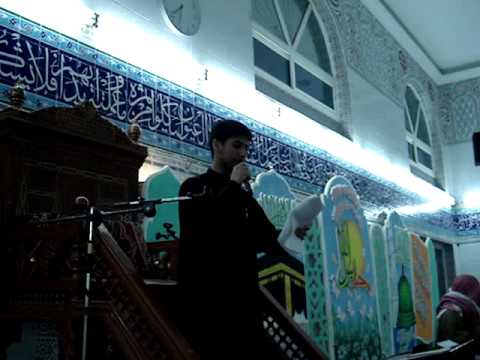
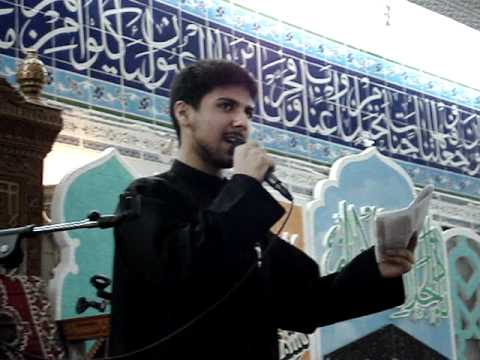
Principles of Parenting Part I: Adolescence - Sayed Mehdi Qazwini (Night 6 Muharram 2019)
0
0
8 المشاهدات·
24/03/23
في
محاضرات
Principles of Parenting Part I: Adolescence - Sayed Mehdi Qazwini (Night 6 Muharram 2019) at the Ahlul Bayt Center of Toledo
أظهر المزيد
Transcript
[0:11][Music] ald SD [Music] Muhammad in the quranic account of the story
[1:26]of the prophet ibraim he seals his work with a prayer and
[1:33]that prayer that supplication that Dua is mentioned in chapter 2ak verse
[1:46]128 oh Allah allow us to continue myself and my son his
[1:53]son is was with him to be in submission to you and
[1:58]that you grant our progeny the generations that come after us allow
[2:05]them also to be in submission to you so it was not
[2:11]just them that they asked for but the generations that came after
[2:14]and this is reflective of the quranic principle that says that when
[2:19]you give you begin with the closest of kin and then you
[2:28]expand outward the Quran says those who are closest to you are
[2:36]a priority when it comes to any good deeds benevolence and it
[2:42]also says those who are closest to you give them their dues
[2:46]and there's a narration that explains what that means she teaches her
[2:54]son how to perform Dua how to perform supplication she says that
[3:03]it is the neighbor first and then ourselves because the Quran tells
[3:10]us to be benevolent and kind towards our neighbors J so those
[3:17]who are within our vicinity our neighbors even the people that we
[3:21]sit next to when we're traveling on an airplane or a bus
[3:24]or in a vehicle So It Begins it begins at home and
[3:31]then it expands outwards and this is a great example of a
[3:38]multi-generational prayer yesterday we spoke about prayer and Dua the Dua of
[3:41]ibraim was one that was multi-generational so ibraim was a man with
[3:47]foresight and he was a man with vision his task that he
[3:53]accomplished was not just based on accomplishing something that would last for
[3:59]three or four or five or 10 years no his vision extended
[4:04]to thousands of years and that's why when he built when he
[4:08]lifted the foundations of the Kaa Allah subhana wa tala told him
[4:16]to call people and he called people and from that day people
[4:21]have been performing the Hajj the pilgrimage to the house of Allah
[4:26]subhah wa ta'ala so there are principles of parenting that we learn
[4:32]from the story of ibraim there are principles of parenting that we
[4:38]learn from lman the wise if you read Surah lman there are
[4:43]a number of admonitions that he speaks to his son there are
[4:50]principles of parenting that we learn even from the story of M
[4:53]and even though was not the father of Musa however the way
[5:00]he taught him there's a narration from our Prophet it says your
[5:12]father three people are in the position of your father number one
[5:18]is your F your father who who who gave you life your
[5:23]biological father number two is the father that married you to his
[5:27]daughter he's also in the position of your father you give him
[5:29]the same amount of respect and number three is the father that
[5:36]teaches you not just the father that teaches you but the father
[5:40]that is that is considered a the one that brings you up
[5:45]the one that teaches you ethics and morals and the narration says
[5:48]the third is the best kind because you can have a biological
[5:52]father that doesn't really care for you you can have a father-in-law
[5:57]that doesn't really care for you but the person who teaches you
[6:01]they are invested in you so there are fatherly principles to be
[6:05]learned from the interaction between mus and even though was not a
[6:08]biological father to M but he was a teacher to M before
[6:14]I speak about principles of parenting though I want to speak about
[6:18]the Power of Habit and the power of a paradigm what is
[6:22]a habit all of us as human beings we creatures of habit
[6:30]even animals you see animals are creatur of habit animals follow certain
[6:37]habits certain patterns so a habit is pretty self-explanatory if I say
[6:41]habit you know what it is but the definition is a pattern
[6:44]that becomes almost involuntary the more that you do it so think
[6:49]about all of the basic habits that you have in your life
[6:53]hygiene habits organizational habits have you noticed even when you wash your
[6:58]hands or when you dry your hands or when you dry your
[7:02]body when you come out of the shower it's a habit or
[7:06]when you brush your teeth the rotation it's a habit do you
[7:08]start with your right teeth and then your front and then this
[7:11]way or do you start front and then right and then left
[7:13]if you track it and pay attention to it you'll realize that
[7:18]it's a habit everything comes out of habit and habits are what
[7:23]Define our Behavior a paradigm is similar to a habit a paradigm
[7:28]is a pattern a pattern of behavior in philosophical terms a paradigm
[7:34]is the way you see the world and the way that you
[7:39]see the world is a habit so if you have I mentioned
[7:43]yesterday if you have a if you have a habit of negativity
[7:47]or you have a h habit of positivity if you constantly look
[7:55]for the good or you constantly look for the evil some of
[7:58]you are probably uh familiar with with Fred Rogers from Mr Rogers
[8:03]Neighborhood he wrote one time in a book he wrote a book
[8:08]on parenting and I'll I'll speak about it a little bit more
[8:09]one of the following nights one of my favorite human beings ever
[8:15]Mr Rogers if you ever watched this show he wrote in a
[8:17]book he said that when I when I was growing up during
[8:20]the days that he was growing up there were a lot of
[8:24]things to be afraid about in the world you know post World
[8:26]War II nuclear proliferation the Cold War there a lot of things
[8:32]to be afraid of he said but my parents always made sure
[8:34]I was safe and they gave me a sense of security and
[8:38]she said and he said that my mother would always tell me
[8:40]the following she said when you're out and about in society always
[8:45]look for the helpers look at the people that are trying to
[8:49]do good in this world the policemen the firefighters the doctors the
[8:53]nurses the people that are contributing to society if you look for
[8:56]the helpers you're going to find the helpers so when you go
[9:00]out in society do you look for the helpers or do you
[9:04]look for the Destroyers some people they go out expecting bad things
[9:08]to happen so your Paradigm in philosophical terms is the habit of
[9:12]how you see the world and the way that we see the
[9:17]world is not how the world is but the way that we
[9:18]are we see the world not at it a as it is
[9:23]but rather as we are so a paradigm shift when we talk
[9:31]about a paradigm shift someone changes a habit in the way that
[9:35]they see the world a paradigm shift begins with the inside out
[9:38]it starts from the inside that's why self-awareness is important now habits
[9:45]can become so powerful and so permeating that they become multi-generational they
[9:57]become genetic hereditary so for instance when you look at the habit
[10:04]of go alcohol abuse or alcohol dependency studies show that it becomes
[10:13]it gets passed down from one generation to another and the Quran
[10:18]talks about this as well if you refer toah Allah subhana wa
[10:24]tala says said the following and this verse represents a very harsh
[10:33]attitude this was the Tipping Point this was the the this is
[10:38]when had had enough so no finally asks God and if if
[10:53]you read the description in the Book of Genesis in the Bible
[10:58]you'll find an even more harsh description but he asks God finally
[11:03]he says oh Allah if you're going to punish these people then
[11:07]annihilate them don't keep any single one of them on this Earth
[11:14]because if you do they are going to do nothing but reproduce
[11:16]people with the same habits if you leave them alone now some
[11:26]people think well this is very strong language no as I mean
[11:31]aren't the prophets supposed to be Mercy think about it and cut
[11:36]him some slack how long was n with was was with his
[11:39]people how how long did he preach for them 950 years I
[11:44]mean think about it sometimes we can't stand someone for 9 seconds
[11:48]let alone 950 years so after 950 years I think we can
[11:53]cut him some slack and say it was okay for him to
[11:57]be frustrated and upset so he asks God he says if you
[12:00]annihilate them annihilate them if you punish them annihilate all of them
[12:05]because their evil doing has become such a habit that it has
[12:12]become hereditary it gets passed down from one generation to another generation
[12:16]and that's what studies show us today certain habits such as drug
[12:21]abuse violence alcoholism it passes down from one generation to another great-grandfather
[12:26]to grandfather to father to son now does that mean that if
[12:31]you come from that type of background you're doomed no there are
[12:35]also what Steven cvy calls transition people a transition person is a
[12:40]person who despite all of the odds in their life they draw
[12:44]a line in the sand and they say that this Behavior stops
[12:46]with me it's not going to pass down even if my grandfather
[12:51]my great-grandfather my great great grandfather going back 10 15 20 Generations
[12:55]had this habit or had this Paradigm I have a choice I
[13:01]have Freedom that's called a transition person and a transition person has
[13:06]to do a lot of work in order to draw the line
[13:07]in the sand and say that it changes with me but really
[13:11]all it requires is one person great example excellent example a man
[13:19]who because of his choice if you if you have if you
[13:26]have had the chance to visit and inshallah all of you have
[13:28]the chance to visit IM Hussein Alam in if you go to
[13:31]the outskirts ofala and you visit the shrine of Al you'll find
[13:35]a plaque that shows his genealogy and you'll see all of the
[13:38]scholars from our the school of thought that are from the lineage
[13:44]of because of that one decision that he made all of the
[13:51]scholars the jurists and the philosophers that came from his lineage um
[13:58]and a number of other Scholars that emerged so a transition person
[14:05]is a person who draws the Line in the Sand so what
[14:08]does it take it takes a power it takes sometimes swimming Upstream
[14:13]if you've seen fish how they swim upstream against a powerful force
[14:17]sometimes you have to do that in order to change your perspective
[14:21]to change the way that you you look at things so it
[14:28]becomes hereditary it's something that becomes part of their DNA and that's
[14:33]why said the following he said he says choose the seed choose
[14:46]the right repository for your seed when you're choosing a partner who
[14:51]you're who you're going to create a legacy with who you're going
[14:57]to establish a family with choose the right repository for your seed
[15:00]there are certain places in the world no matter how great the
[15:05]seed is it's not going to grow into a tree that will
[15:09]bear fruit and there are certain places in the world so we're
[15:13]very lucky in California because of the climate the weather that a
[15:17]lot of different types of fruits and vegetables can grow you can
[15:22]take that same seed and go to Antarctica and plant it there
[15:26]nothing will happen so the seed has to be good seed but
[15:30]the soil also has to be good soil as well so how
[15:38]long does it change how long does it take in order to
[15:42]change a habit or a paradigm well it depends on who you
[15:48]ask some people say it takes 21 days to form a new
[15:50]habit some people say no 21 days is not even scratching the
[15:56]surface you need at least 66 days science tells us and in
[15:59]order to change a habit some people say 40 some people say
[16:02]70 the real answer is that with everyone it's different sometimes you
[16:08]pick up a habit after the first time that you try something
[16:11]it becomes a habit sometimes it takes you two to three weeks
[16:15]sometimes it takes you two months sometimes it takes you three months
[16:22]or more so one Hadi says the following oh that a person
[16:32]who Associates with a group of people for 40 days becomes like
[16:35]them becomes one of them develops their same habits and sometimes it's
[16:41]even more than that depending on the type of habit that it
[16:44]is sometimes it's less than 40 days have you noticed sometimes you
[16:48]start hanging out with a group of people if you're in college
[16:51]or university or high school all of a sudden within 2 3
[16:56]4 days so sometimes within 2 3 days your behavior begins to
[16:59]change your language begins to change and that's why some people you
[17:02]when when it when it comes to change a lot of people
[17:06]have the they say I need a change of scenery I need
[17:11]to travel I need a vacation and sometimes it's more than a
[17:14]change of scenery it's a change of self that needs to happen
[17:19]so they move to a new country or a new city or
[17:24]they change their food you know their food habits their eating habits
[17:28]the kind of diet but then nothing really changes because nothing has
[17:32]really changed on the inside That's The Power of a paradigm once
[17:37]you once you have a paradigm shift and things begin to change
[17:40]on the inside that's where true change happens and there are a
[17:44]lot of books that are written on surface level things like personality
[17:46]and it's important to have a great personality that when you go
[17:52]out into the world you know you know how to speak you
[17:55]know how to uh smile you know how to present yourself but
[18:01]if nothing changes on the inside then what happens those behaviors continue
[18:08]the habits they continue so the brain can change and yesterday I
[18:12]mentioned neuroplasticity which proves that the brain can change you can create
[18:18]new neurological path uh Pathways in the brain neurological Pathways in the
[18:23]brain and in the same way that the brain can change the
[18:25]mind can also change there was a great book written by Paul
[18:30]colany who was a um a fellow at Stanford and it became
[18:36]a New York Times bestseller when breath becomes air and this was
[18:42]a very very intelligent person who became a brain surgeon he was
[18:46]a philosopher and he had degrees in philosophy and also became a
[18:51]brain surgeon and then all of a sudden he was struck with
[18:54]a very aggressive malignant form of lung cancer and so once he
[19:00]was struck with that disease he began to write he began to
[19:05]write his thoughts so he says as a brain surgeon that it's
[19:09]hard for me to operate on a person's brain if I'm going
[19:13]to operate on a person's brain I have to get to know
[19:17]his mind I have to know his values I have to develop
[19:19]a relationship with them so in the same way that that brain
[19:23]can CH the mind the seed of it is the brain in
[19:28]the same way that the brain can change the mind can also
[19:31]change but something has to happen that's beyond surface level something has
[19:35]to happen that's from the inside out so self corre self-correction is
[19:40]very important and that's why if you read the the um the
[19:46]stories of the prophets the prophets were also self-corrective they developed they
[19:51]matured they grew so sometimes we need to hold up a mirror
[19:56]in front of ourselves when it comes to proper parenting Styles and
[20:02]we have to ask ourselves the parenting style that I have where
[20:05]do my values come from you know if if you try to
[20:10]there was there was a a doctor who had written U he
[20:14]had he had coached a number of Executives and companies and he
[20:17]had even coached a number of um people who went to play
[20:22]for the Olympics athletes and he wrote a number of books Dr
[20:26]Dennis waitley and he gave an example to someone sometime that he
[20:29]was coaching a young gentleman who was trying to make it into
[20:32]the Olympics and he was assigned as the team shrink the team
[20:37]psychologist he had a conversation with this young man he said he
[20:40]said why are you participating in the Olympics why are you training
[20:45]so hard so the young man gave him an answer he said
[20:46]you know because I want to win the gold he said well
[20:49]okay why do you want to win the gold he said because
[20:51]I want to make my country proud why do you want to
[20:53]make your country proud he kept pressing him and then in the
[20:56]end the person said well I don't know what's what's going on
[20:59]you know why are you asking me these questions he says the
[21:04]reason why is because as you ascend there's always going to be
[21:07]more pressure correct as you ascend there's always more pressure there's always
[21:11]more challenges and what happens when you squeeze an orange what do
[21:15]you get when you squeeze an orange whatever is in it is
[21:21]going to come out if it's a sour orange you're not going
[21:23]to get Pleasant orange juice you're going to get stuff that nobody
[21:26]wants to drink as people begin to Excel and they begin to
[21:31]be get better in their in their in their life there's more
[21:37]pressure Financial pressure marital pressure spiritual pressure social pressure and what happens
[21:43]is like you become like an orange whatever is in you comes
[21:46]out so if the inside is rotten what do you expect the
[21:52]product to be that's why an inside out change is important so
[21:56]back to Parenting Styles a couple of years ago I mentioned this
[21:58]and I I just want to recap and it was a number
[22:02]of parenting Styles which were recorded by uh a youth psychologist by
[22:05]the name of Dr Tim Elmore uh Tim Elmore so I want
[22:09]to go over them very very quickly so a number of he
[22:12]talks about a number of D damaging parenting styles that I want
[22:14]to share with you and each one of these has an interesting
[22:16]name so bear with me so number one there are helicopter parents
[22:22]what's a helicopter parent if you've ever had a helicopter hover above
[22:25]you it hovers above you and it follows you wherever you go
[22:29]helicopter parents are the type of parents that follow their children wherever
[22:33]they go to make sure that there is nothing blocking their path
[22:39]that there's no defeat there's no resistance there's no challenge there's no
[22:43]obstacle another name for them is lawnmower parents it's like walking in
[22:46]front of the child with a lawn mower and getting all the
[22:49]grass out of the way these are helicopter parents so what tends
[22:54]to happen with helicopter parents and he gives a story he says
[22:57]one one time a a president of a college called me and
[23:02]he said that I received the call from a mother of a
[23:04]student asking that if her student if her son wore the sweater
[23:10]on the first day of school she had to call the president
[23:13]of the college to make sure so this is number one helicopter
[23:17]parents second type Are karaoke parents they grab the mic and they
[23:24]try to imitate their kids it's a cool thing they try to
[23:27]imitate and they realize that the kid doesn't need enough another friend
[23:30]the kid doesn't need a friend the kid needs a mentor the
[23:35]kid needs a leader the kid needs a role model another type
[23:39]of parent is a dry cleaner parent what do you do with
[23:43]dry cleaning you drop it off and you Outsource the cleaning to
[23:48]somebody else many parents the most important task that they have is
[23:52]T bringing up their kids they Outsource it to someone else it's
[23:55]like when you bring your child to to to to the m
[23:59]or the Islamic school but there's zero at home how do you
[24:01]expect anything to happen at the Masjid for them sitting through a
[24:06]lecture for 45 minutes what's not available at home is not going
[24:09]to be available at the Masid so sometimes we need to Outsource
[24:12]other things and we need to take care of the things that
[24:15]are important in our children's lives then you have volcano parents have
[24:20]you seen a volcano it sits for thousands of years sometimes it
[24:25]sits for millions of years and then all of a sudden it
[24:26]erupts and explodes and and all of the villagers they have to
[24:31]run for their lives there are some parents they have anger issues
[24:34]and they explode on their children and everyone around them as well
[24:39]the Hadith says that anger unresolved anger there's good types of anger
[24:49]as well but unresolved violent anger is a burning piece of charcoal
[24:53]that sits in the heart of man then you have Dropout parents
[24:58]what's a Dropout parent someone who's just given up like a Dropout
[25:01]in high school or college they've given up on fathering their children
[25:05]and most of the times a lot of the times it's the
[25:08]father but it also can be the mother as well sometimes the
[25:10]mother can walk out on the family but usually in our society
[25:15]today usually it's the father they've simply given up then you have
[25:19]the bullied parents anything that the child wants they receive then you
[25:23]have the groupy parents groupies you know like the groupies that follow
[25:27]the rock stars around it's like the ones that you see on
[25:32]the beauty pageant shows on TLC they bask in the glory of
[25:36]their children and finally last but not least you have Commando parents
[25:39]have you seen how a Commando repels an officer repels in they're
[25:46]very very strict very mil military style and the entire conversation and
[25:50]the entire uh the entire thing revolves around them and while there
[25:54]are good things that can come out of some of these parenting
[25:56]Styles the key is B bance the key is understanding your role
[26:03]in your child's life I'll end with one story there was a
[26:07]a gentleman who wrote A who he wrote a number of books
[26:11]and um he was speaking about how when he was young his
[26:13]mother was a Dropout parent she walked out on him and his
[26:18]father for whatever reason he doesn't mention the reason he says his
[26:20]father was very very strict he was a Commando style parent he
[26:25]was very military he was very by the books so you had
[26:27]to in his home you had to wake up in the morning
[26:29]you couldn't sleep in you had to do chores you had to
[26:33]get a job you had to pay for yourself you know anything
[26:35]that a Commando type parent would want he says there were many
[26:39]positive things that came out of that I learned to be a
[26:42]very hard worker very very responsible and that contributed to the success
[26:47]in his life but he said it also created within me an
[26:51]idea that I have to live for the happiness of my father
[26:55]not for the happiness of myself so he narrates a story he
[26:58]says one time he says when I Grew Older I became very
[27:01]very successful and I had my eye on a home in the
[27:04]North of San Francisco and one day I made enough money that
[27:07]I can go to that home and buy it cash and he
[27:10]bought the home cash and because his idea of success and happiness
[27:13]was making his father happy he prepared a very elegant occasion so
[27:21]he bought all of the furniture and what he did was he
[27:24]timed it perfectly that his father and his fiance the father's fiance
[27:27]would arrive and a way that they would enjoy a meal with
[27:31]him and then they'd be able to see the sunset over San
[27:33]Francisco Bay he says I timed it perfectly think about the buildup
[27:39]what is required he says finally when I invited them we got
[27:44]to this panoramic window this panoramic view and as the sunset was
[27:47]coming down he said the only thing that I wanted was my
[27:52]father to be proud of me and happy for me he said
[27:56]I turned around to ask my father dad what do you think
[27:59]of me now I've made it in life I've purchased this beautiful
[28:01]home look at this beautiful view he said my father was not
[28:06]looking at the view he was looking up into the corner of
[28:08]the ceiling where there was water damage he said what what are
[28:14]you going to do about that water damage right there and then
[28:17]he realized at that moment he said I was crushed emotionally I
[28:20]was crushed but I realized that I was living for somebody else's
[28:24]happiness and sometimes we have very good intentions for our children but
[28:28]we set set a standard that they live for our happiness and
[28:31]our success and what is somebody going to think you know if
[28:36]if if it's going to look really really good on my resume
[28:39]if my child earns a certain degree not good for them but
[28:43]good for me and good for my image and sometimes that happens
[28:46]it's not evil intentions it's good intentions so sometimes my friends we
[28:50]need to draw lessons and the best lesson in the Quran is
[28:54]the story of the Prophet lman one of the best stories because
[28:56]everything that he tells his son he doesn't approach him in an
[28:59]authoritarian way he gives him rationale and he gives him reason and
[29:05]he delivers it with love and he delivers it with kindness and
[29:07]compassion and care so inshallah we can learn from the multiple stories
[29:11]of the Quran now I want to take your hearts toala this
[29:15]is the night that we remember some of the companions of Imam
[29:19]Hussein the loyal lovable people the ones who would Place their life
[29:25]before the life of the Imam and they did not see as
[29:29]a burden they did not see it as a task and a
[29:33]project that needed to be completed they saw it as an honor
[29:35]it was an honor for them to stand by their Master AB
[29:39]abdah it was not a burden for them and some of these
[29:44]people knew the Imam from childhood and some of them had only
[29:46]met the Imam two weeks before or 10 days before but all
[29:51]of them had the same Mission the mission that United them was
[29:54]the love of abdah Hussein that's that's why no matter what background
[30:00]you come from the love of is a choice that you plant
[30:06]in your own heart and some people live in the shadow of
[30:11]the their entire lives but there's no true love for for the
[30:17]bit in their hearts while some others they are new to the
[30:19]faith they're they're new to the school of thought and they love
[30:26]them like they love no others and among those people was a
[30:31]man who was a companion of a very knowledgeable man a very
[30:37]scholarly man he was one of the first people who wrote a
[30:43]letter to Imam Hussein inviting him to kufa so the Imam responded
[30:46]and of course on the way he was his path was diverted
[30:52]and so Imam Hussein writes a letter to telling him that we
[31:00]are inala and he receives the letter and this is a noble
[31:03]man a man who has business a man who has family a
[31:07]man who has trade he gets up and he leaves everything behind
[31:12]and he tells his servant he says meet me at the at
[31:14]the border of the city with my horse because at that time
[31:18]as as we mentioned yesterday there was a there was something like
[31:22]a lockdown it was a curfew nobody could leave and enter didn't
[31:26]want that but managed to sneak out some narration said that he
[31:31]set the servant free he said you're now free you no longer
[31:36]have to serve me but then the servant said I want to
[31:38]be with you and accompany with you on this Mission so he
[31:42]accompanied him to carala and what didib see when he came tobala
[31:47]he saw the tent of IM Hussein that was pitched he saw
[31:55]the camp he approached Imam Hussein Alam narrations say that narrations say
[32:04]that learned of his arrival and so she sent a servant to
[32:11]send her Salam to him and when he heard that Z the
[32:18]daughter of his master is saying Salam to him he broke down
[32:23]in tears he began to weep how is it that this lady
[32:28]this princess is now in this situation surrounded by the enemy so
[32:35]being a man of nobility being a man of Honor on the
[32:40]day of he volunteered himself before the Banu Hashim to go out
[32:44]and he went out into the battlefield like a brave Valiant Warrior
[32:51]striking the enemy down right and left until finally he was struck
[32:54]down and he called out to his master IM Hussein am Muslim
[33:00]both of them they came to his Aid Muslim another righteous companion
[33:04]he says to him yah Habib you are in your final moments
[33:09]is there anything and I know that I am walking in your
[33:11]footsteps as well is there anything that you have for me to
[33:14]deliver is there anything that you want me to execute on behalf
[33:19]he says the only thing that I want from you he points
[33:23]to Imam Hussein he says I want you to protect him protect
[33:26]him with every breath of life that you have and he passed
[33:29]on another one of the companions was a young man by the
[33:35]name of his father had gone out into the battlefield he had
[33:38]F fought very valiantly he had lost his life then came to
[33:45]IM Hussein wearing his armor wearing his wearing with with his sword
[33:49]and his shield asking for permission to go out into the battlefield
[33:52]Imam Hussein how could he send a young man into the battlefield
[33:57]he did not have the heart to send him into the battlefield
[33:59]he said no my son turn go back to your mother narrations
[34:05]say that the mother took the boy by the hand she was
[34:10]now his she was now his protector she was the one to
[34:12]decide whether he would go out into the battlefield or not she
[34:15]took him to IM Hussein she said saydah please allow him to
[34:20]go out into the battlefield go out let him go out and
[34:24]fight and defend you defend your woman folk Imam Hussein said how
[34:27]can I allow a woman to lose two men in her life
[34:30]in one day you have already lost your husband you have already
[34:33]become a widow he has already become an orphan how can I
[34:38]give permission for your son to be taken away from you now
[34:41]some narrations say that she turned to him and she began to
[34:45]plea she said he she says is it fair for your mother
[34:54]a zah to weep for her son and I cannot weep for
[34:58]my son upon hearing that IM Hussein wept he gave the son
[35:03]His blessings he went out into the battlefield he began to [Music]
[35:17]recite truly my truly my Amir my master and my commander is
[35:23]Hussein do you know anyone who is like him do you know
[35:25]anyone who is the son of Ali and Fatima and he went
[35:29]and fought into the battlefield until he attained his martyrdom another companion
[35:33]was a man who had just met Imam Hussein a man who
[35:39]had converted from Christianity and on that day he decided to go
[35:43]out into the battlefield narrations tell us that he was a newlywed
[35:45]so his wife did not want him to go out however his
[35:50]mother insisted that he' go out into the battlefield so he went
[35:53]out into the battlefield he fought and as his wife was watching
[35:58]him from a distance distance she saw that he was tired she
[36:01]began to beg she began to plead come back he came back
[36:06]and then he went out into the battlefield one more time finally
[36:09]he saw his wife Coming behind him she came with a weapon
[36:13]in her hand she began to fight side by side with him
[36:16]he turned to her he said what has happened only a few
[36:20]moments ago you told me to come back and not fight now
[36:22]you are standing with me side by side this righteous lady she
[36:29]saidah do not blame me she said that I heard screaming for
[36:37]help and that has broken my heart and in that moment both
[36:40]him and her lost their lives [Music]
0 تعليقات
sort ترتيب حسب
- أعلى تعليقات
- أحدث تعليقات
التالي
8 المشاهدات · 25/12/01
10 المشاهدات · 13/12/26
10 المشاهدات · 14/09/23
7 المشاهدات · 21/12/07
7 المشاهدات · 22/11/28
10 المشاهدات · 24/11/14
8 المشاهدات · 25/06/22
8 المشاهدات · 25/11/02
8 المشاهدات · 13/01/07