Volgende
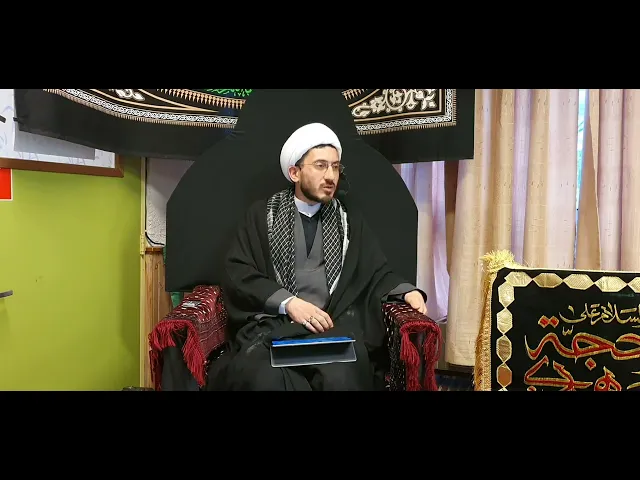
Mab'ath Celebration - Sheikh Azhar Nasser
0
0
0 Bekeken·
26/01/17
Laat meer zien
Transcript
[0:00]dream.
[0:31]be in ling them.
[1:02]Be in thill.
[1:47]Fore [singing] Oh, it most mostly for [singing] me.
[3:37][singing] God No Belman.
[4:22]Man, all you Ah, all allayikum.
[5:42]Brothers and sisters, as [clears throat] we wait for the guest speaker,
[5:46]I want to remind you that we, as you may have noticed
[5:50]outside, we have uh stand for one of the local businesses here,
[5:53]the Salah mat.
[5:56]Um they sell a quality um salah mats and um kindly the
[5:59]proceeds from uh part of the proceeds of what they sell would
[6:05]go and support our future uh Mecca uh center inshallah.
[6:12]So stop by and um see what they got.
[6:25]Muhammad.
[6:26]Brothers and sisters, we gather here tonight to commemorate al- Mabbat, the
[6:33]blessed moment when Allah subhanahu wa ta'ala chose Prophet Muhammad Sall to
[6:40]receive the first revelation marking the beginning of Islam's message to humanity.
[6:45]This message to human, this event transformed the course of history.
[6:51]Calling humanity from darkness into light.
[6:55]Islam began with knowledge, passion, patience, and trust in Allah.
[7:01]The prophet sallallah.aii faced fear and uncertainty.
[7:08]Yet he carried this divine message with unwavering faith and mercy for
[7:17]all humanity.
[7:16]Tonight we have a special guest, Shikh Azhar Naser.
[7:23]Shah Naser was born and raised in Michigan and has a degree
[7:27]in cultural anthropology from the University of Michigan.
[7:31]After completing his academic studies, he pursued his religious studies at the
[7:37]of Najaf under the offices of grand ayatani and grand ayatim.
[7:42]In addition to his extensive study of classical religious text, he has
[7:49]also taught introductory courses to western students at the seminary.
[7:54]Ahar has a deep passion for the study of the holy Quran
[7:59]which is evident from his lectures and discussions.
[8:03]He authored multiple books and he is the religious director of curriculum
[8:08]planning and he is the all he's also a co-founder of tasniv
[8:12]institute.
[8:13]We are honored to have him here with us tonight and we
[8:20]ask you to welcome him with salathammed.
[8:44]Muhamad Hussein.
[9:16]Alhamdulillah.
[9:29]Respected scholars, elders, brothers and sisters, I begin by extending my greetings
[10:09]to all of you on the blessed occasion of the of the
[10:13]prophet sallallahu alaihi wasall.
[10:15]When the prophet began his divine mission at the age of 40,
[10:24]he faced tremendous opposition from his community from both strangers as well
[10:35]as members of his own family.
[10:36]And Allah subhana wa ta'ala in many verses in the Quran he
[10:43]documents for us the different ways in which the mushri tried to
[10:52]discredit him.
[10:53]One of the tactics that they used, one of the arguments that
[10:59]they made to discredit the prophet is to say, "How can he
[11:08]be a messenger of God when he's only a human being?" They
[11:13]used his humanity, his humanness as an argument for why he cannot
[11:24]possibly be a messenger of God.
[11:25]If you look at the Quran, I'll share with you a few
[11:28]verses where the mushri are making this argument that how can you
[11:35]claim to be a prophet, a messenger of God, someone who's connected
[11:43]to the divine while when we look at you, we see an
[11:46]ordinary human being.
[11:49]Allah subhana wa ta'ala in surah al ay 7 Allah quotes a
[11:59]statement that is being made in Mecca about the prophet a type
[12:03]of propaganda that's being used to delegitimize his movement Allah says They
[12:20]say, "What kind of messenger is this?" A messenger that eats food
[12:28]just like you and I.
[12:29]A messenger that walks in the marketplace.
[12:34]So what do they expect from someone who is a messenger of
[12:41]God?
[12:39]They say there should be an angel that is sent down that
[12:49]is accompanying him.
[12:57]Their argument is essentially what?
[13:03]That a messenger of God must be by definition someone who is
[13:09]supernatural.
[13:08]And therefore, a prophet who sits and eats food like you and
[13:15]I is not someone who deserves to be venerated.
[13:20]Is not someone who deserves to be followed and emulated.
[13:23]Their argument is that what makes him different from us?
[13:30]He's human.
[13:29]So this is one ayah of the Quran where the argument that
[13:34]is being made is what makes Muhammadb Abdah qualified to be a
[13:38]prophet.
[13:40]He seems so ordinary.
[13:43]He's living an ordinary life.
[13:49]He eats.
[13:46]He sleeps.
[13:47]He walks among the people.
[13:54]This is one ayah.
[13:57]In another ayah we we find that one of the reasons why
[14:03]the mush they constantly make demands for miracles is because it does
[14:10]not compute in their minds that someone who is fully human could
[14:17]be connected to the divine.
[14:18]If you look at the Quran, if you look at verses 90
[14:25]to 93, what do they say to the prophet?
[14:31]Oh Muhammad, we will never believe that you are a messenger of
[14:38]God until you do what?
[14:44]Until you perform a miraculous act.
[14:49]You have to show us that you are supernatural.
[14:52]That you have the ability to make a spring gush from the
[14:58]earth.
[14:59]You just point to the ground and a spring gushes forth.
[15:08]Or you should be someone who has impressive material assets.
[15:16]You're a you're not someone who has an impressive financial portfolio.
[15:23]You're just a very simple man.
[15:25]If you want us to recognize you as a prophet, as a
[15:28]messenger of God, you should have a garden of date palms and
[15:35]grapes.
[15:36]And at that time, these were delicacies.
[15:39]Those were very, you know, uh, expensive fruits, meaning that you should
[15:46]have real estate, you should have wealth, and you should be able
[15:55]to cause springs to flow from the ground in between these these
[15:58]gardens.
[15:59]So you need to have supernatural abilities and you also need to
[16:05]have an impressive financial portfolio.
[16:09]You need to have property.
[16:10]You need to be rich for us to believe that you are
[16:16]connected to Allah subhana wa ta'ala.
[16:24]If you are truly a prophet of God, then you should have
[16:32]the ability to unleash punishment upon us.
[16:35]You should have the ability to cause the sky to collapse upon
[16:39]us.
[16:40]As you claim, God will punish you.
[16:43]You claim that God punishes the wrongdoers.
[16:45]Okay, bring it on.
[16:48]Bring on the punishment.
[16:48]Cause the sky to collapse.
[16:55]Or if you are truly a messenger of God, you're God's messenger.
[17:00]Show us the one who sent you.
[17:03]Bring God himself.
[17:06]Bring the angels.
[17:05]You say is bringing you revelation.
[17:10]Where's And then what do they say?
[17:15]You should have a home that is made out of gold.
[17:20]If you're chosen by God, there should be signs that you're connected
[17:26]to the owner of the heavens and the earth.
[17:29]We look at your house.
[17:30]You live in a very simple house.
[17:31]If you are a messenger of God, you should have golden doors,
[17:37]a golden roof, right?
[17:41]Your bathroom should look like Saddam Hussein's toilets, right?
[17:44]It should be made out of made out of gold.
[17:48]Everything should be fancy.
[17:48]And then what do they say?
[17:53]You should be able to have the ability on demand to ascend
[17:58]into the heavens.
[18:07]If you're a prophet of God, you should have the ability to
[18:13]soar into the heavens, to ascend into the heavens.
[18:17]And by the way, we won't believe that you actually ascended until
[18:21]you bring back a book with you from Allah so that we
[18:26]can read it.
[18:26]Look at all of these demands.
[18:29]You read them and you think to yourself, do you want do
[18:30]you want fries with that as well?
[18:31]What what is this?
[18:34]All of these long demands of what is going to qualify someone
[18:37]to be a messenger and a prophet.
[18:40]Allah tells the prophet they're making all of these demands.
[18:46]Tell them glory belongs to God the only one who has no
[18:53]limitations.
[18:54]The only one who can do anything and everything on demand is
[18:57]Allah.
[19:03]I am nothing but a human messenger of God.
[19:08]Now you find in another ayah here Allah subhana wa ta'ala shares
[19:19]with us how the people during the time of would try to
[19:22]discredit in the same way.
[19:23]Subhan Allah.
[19:25]It's the same mentality, the same logic.
[19:29]If you look at ay 24 when you read the Quran, whenever
[19:41]you come across the term, this phrase is used throughout the Quran.
[19:44]The meal said the word mela literally means the elites of the
[19:49]community, the nobles.
[19:52]You know the verb mela literally means to fill something.
[19:56]These are usually the people who fill up the court of the
[20:01]king.
[20:02]They're the important personalities, the prominent people.
[20:06]During the time of the elites, the nobles, they tried to discredit
[20:12]by doing what?
[20:15]They said it's the same argument is claiming to be a prophet.
[20:26]He's claiming to be a messenger, but he's just a human being
[20:31]just like us.
[20:34]He's making this claim because he wants to impose and assert his
[20:43]superiority over us.
[20:42]So what is the argument that's being made?
[20:45]Why did God choose him and not us?
[20:49]What makes him so special?
[20:52]Allah subhana wa ta'ala in another ayah he explains to us that
[21:00]there is something that makes these personalities different from the ordinary human
[21:06]being from the ordinary person.
[21:08]Yes, the prophets, the messengers, they share in our humanness.
[21:14]They sleep, they eat, they get married, they have children, they get
[21:23]sick, they die, they feel sadness, they feel joy, they experience the
[21:27]full spectrum of human emotions.
[21:28]They have all of these human experiences.
[21:31]They are biologically similar to us.
[21:34]So, what makes them different?
[21:37]Allah subhana wa ta'ala he says inah ayah 41 verse 6 Allah
[21:48]tells the prophet how to respond to all of these attacks that
[21:53]you're you're just human what makes you qualified to be a prophet
[21:59]to be a messenger Allah tells the prophet don't deny your humanness.
[22:06]You are a human being.
[22:13]But what is the distinguishing factor?
[22:17]The distinguishing factor is what?
[22:24]I am a human being.
[22:30]Yes.
[22:27]But I am a human being that has refined himself to such
[22:35]a degree that I have the capacity to receive the word of
[22:43]God.
[22:41]That is the difference.
[22:44]On a human level, prophets are the same.
[22:47]They're similar to us.
[22:49]What makes them different is their spiritual capacity.
[22:55]They have the ability to receive revelation.
[23:00]When someone says, "Why did Allah reveal to and not me?
[23:06]Why did Allah reveal to Muhammadb Abdah and not me?" It's not
[23:11]a matter of Allah just arbitrarily, you know, it's not a lottery
[23:14]system where let's see who's going to receive revelation.
[23:20]It's random selection.
[23:19]It's not random selection.
[23:22]It's about who has the spiritual capacity to receive the word of
[23:33]God.
[23:30]In a statement to what does he say?
[23:39]These hearts they are containers.
[23:47]The best of these containers are the ones that have the ability
[23:52]to hold more.
[23:51]If you look at a vast ocean, how much you take from
[23:58]the ocean depends on the capacity of the vessel.
[24:01]If you go to the ocean with a cup, how much water
[24:05]can you take with you?
[24:07]A cup worth.
[24:06]If you go with a bucket, you can take a bucket worth.
[24:10]If you go with a truck, you take a truck worth.
[24:13]It depends on how much you can receive.
[24:14]Allah subhana wa ta'ala in the Quran when he says that his
[24:20]prophets they are human but they receive revelation the meaning is what
[24:25]these are human beings who have developed within themselves a greater capacity
[24:32]to receive from Allah subhana tala now what does this mean you
[24:39]see Allah subhana wa ta'ala when he speaks about revelation in The
[24:46]Quran revelation is what?
[24:48]It's to receive communication from God to receive his words.
[24:51]Allah subhana wa ta'ala in the Quran he describes the his own
[24:58]words in a very interesting way in what does Allah say to
[25:03]the prophet?
[25:09]We are going to cast upon you, oh Muhammad, a weighty word.
[25:17]Allah describes his words as what?
[25:23]As weighty.
[25:22]They're heavy.
[25:24]The words of the Quran are heavy.
[25:28]Not physically heavy, but they are heavy in knowledge.
[25:31]The content, the substance of divine words, they're very heavy.
[25:37]Now you may tell me how can we how can we conceptualize
[25:40]the heaviness of a word.
[25:41]I'll give you a very simple example.
[25:44]If I tell you that tomorrow a leaf is going to fall
[25:50]from a tree, is that information very heavy on you?
[25:55]No, it's not a big deal.
[25:58]Leaves fall from trees all the time.
[26:00]It's very non-consequential.
[26:02]So we can say that that is a light word.
[26:05]It's very light.
[26:07]Doesn't really have an impact on you.
[26:10]It's It doesn't weigh heavy on you.
[26:12]But if I tell you tomorrow your child is going to die,
[26:17]is that a heavy word?
[26:21]That is a very heavy word.
[26:22]That's heavy knowledge.
[26:25]Allah subhanahu wa ta'ala when he reveals his words his words are
[26:33]very heavy because they open your eyes to some very deep realities.
[26:38]It's very heavy knowledge to know what is going to happen after
[26:43]death.
[26:46]It is very heavy knowledge to know what is going to happen
[26:51]on the day of judgment.
[26:53]It's very heavy knowledge to know that every single inch of this
[27:00]universe is occupied by an angel that is bearing witness to the
[27:07]glory of God.
[27:07]That's very heavy.
[27:10]That changes everything.
[27:12]Most people, they don't have the capacity to handle that type of
[27:16]knowledge.
[27:18]But who has the capacity?
[27:20]The prophet.
[27:22]You have to have a very humble heart to receive that type
[27:27]of heavy knowledge.
[27:28]You have to have complete trust in Allah, complete love in him.
[27:33]You have to be completely and utterly pure because these words these
[27:40]messages messages they're coming from the one who is absolutely pure from
[27:48]and therefore when Allah subhana wa ta speaks about the effect that
[27:54]his words have when they come from the higher worlds down to
[28:00]this inash what do we Many of us, we've memorized it.
[28:14]If Allah caused the Quran to descend upon a mountain, there's nothing
[28:20]that is more stable in our minds than a mountain.
[28:23]It's majestic.
[28:26]It's powerful.
[28:26]It's awe inspiring.
[28:29]It's stable.
[28:31]Allah says, "If the mountain directly receives my words, the Quran, what
[28:36]will happen to this mountain?" You would have seen this mountain become
[28:43]very humble and the mountain would be on the brink of crumbling
[28:51]because it is perceiving the power and the glory of Allah.
[28:58]The mountain doesn't have the capacity to receive it but the heart
[29:05]of Allah does.
[29:05]If the mountain Allah says it has it will have if the
[29:13]Quran is descended upon it.
[29:13]The question is what is happening in the heart of the prophet
[29:19]when the Quran comes to his heart.
[29:23]If the mountain which is an inanimate object is What is the
[29:30]prophet experiencing when the Quran is coming to him?
[29:33]Something that we cannot even fathom.
[29:37]We cannot grasp.
[29:38]I want to share a a very beautiful hadith that will allow
[29:47]us to gain a deeper appreciation of who the prophet is.
[29:55]And the hadith is found in Kafi Kafi written by the great
[30:04]ali this narration is found in a very interesting place in the
[30:09]book it's found in you know kafi has different chapters it's pro
[30:18]it's the most comprehensive early collection of hadith it contains a hadith
[30:24]about theology, sacred history, law and so on.
[30:29]This book is found in the book of im and it's actually
[30:36]under the subsection that speaks about the virtue of shaking hands with
[30:43]other seems like a very odd place to read a hadith about
[30:47]the lofty status of the prophet.
[30:51]Now what does this hadith say?
[30:52]The hadith is from Zorb.
[30:55]Who is Zara?
[30:59]Zor is arguably the greatest among the companions of the Imams of
[31:07]B.
[31:05]We can say that he's al Muhammad the jurist from Al Muhammad
[31:12]from the students of Al Muhammad.
[31:16]He narrates aith from imbal says what he says.
[31:25]I heard IM say the following.
[31:28]I heard I say im Bak he says verily Allah cannot be
[31:41]described.
[31:44]What does this mean?
[31:47]People be people describe Allah all the time in dua.
[31:51]Don't we describe Allah?
[31:53]We're always describing Allah.
[31:56]What does the Imam say when he says God cannot be described?
[31:59]What the IM means is that you can never describe God in
[32:04]a way that fully encompasses his essence.
[32:08]Everything, all of his names, they give you little glimpses of who
[32:13]he is.
[32:15]But you can never capture his essence.
[32:18]He cannot be described.
[32:23]And how can he be described?
[32:31]Imak says when Allah says in his own book that they have
[32:36]not measured God as he deserves to be measured.
[32:40]They have not described him as he deserves to be described.
[32:46]God cannot be encompassed by a description.
[32:57]Whenever you attempt to describe Allah, know that he is greater than
[33:07]any description that you can come up with.
[33:08]And this is actually the meaning of when we say Allah.
[33:15]What is the meaning of when you translate it?
[33:19]Often times we mistransate it because Allahbar we say okay it means
[33:24]that God is greater and it's as if there's a blank.
[33:28]It's almost like an incomplete sentence.
[33:30]God is greater.
[33:32]The listener is thinking greater than what?
[33:35]It's as if there's a blank.
[33:36]And some people try to explain by saying it means that God
[33:42]is greater than anything.
[33:43]He's greater than the sun.
[33:44]He's greater than the moon.
[33:47]He's greater than the Milky Way galaxy.
[33:49]He's greater than the Andromeda galaxy.
[33:51]He's greater than everything.
[33:52]But the imams, they say, "No, that's not what means." Because you
[33:59]have actually lowered God by even comparing him to his creation.
[34:03]You can't even compare it to anything.
[34:07]There's nothing that is remotely like him.
[34:10]So to say that God is greater than this creature or that
[34:15]creature, you've already lowered God.
[34:17]So what is the meaning of they say the meaning of is
[34:28]means that God is greater than any description.
[34:33]He's greater than any description.
[34:36]Anything that you try to imagine in your mind, any image that
[34:40]you form in your mind is not God.
[34:46]Why?
[34:47]Because any mental image or form that your mind generates is what?
[34:51]Is the creation of your mind.
[34:54]And God is not a creation.
[34:56]God is not he's not something that is generated from something.
[35:01]So the IM he begins this hadith by affirming that God is
[35:08]indescribable.
[35:10]He's indescribable.
[35:12]Even when he describes himself to us, it's just glimpses.
[35:18]It's just helping us to gain a better understanding of who he
[35:24]is.
[35:24]But we can never truly capture the totality or his essence.
[35:28]We can't.
[35:30]He's indescribable.
[35:30]And then the im he does something very interesting.
[35:34]He speaks about the indescribability of Allah.
[35:37]And then look at what he says.
[35:45]The IM doesn't just say that Allah is indescribable.
[35:50]He says and verily the prophet is indescribable.
[35:57]Even you cannot describe him.
[36:01]No matter what you say about the prophet, the prophet is greater.
[36:05]If I sit with you for days, if I spend my entire
[36:10]life describing you, describing to you the virtues of the prophet, Im
[36:15]Bakr is saying what?
[36:18]He's saying you cannot describe him.
[36:20]You will always fall short.
[36:21]He's greater than any description that you can give.
[36:27]And look, listen to this.
[36:30]I want you to pay very close attention to this.
[36:32]These hadith are very rarely shared from the I want you to
[36:38]pay attention.
[36:37]He says, "The prophet cannot be described." Why?
[36:51]This statement has puzzled the Im Bakr says what?
[37:00]He says the prophet cannot be described.
[37:02]He's indescribable.
[37:04]And how can you describe a servant where Allah subhanahu wa ta'ala
[37:13]has placed seven veils.
[37:18]What does this mean?
[37:21]God has placed seven veils.
[37:25]What does this mean?
[37:28]How does this make the prophet indescribable?
[37:30]If you look at the statement of many of us, we know
[37:38]him as the author of what?
[37:40]Right?
[37:41]And subhan Allah, most people who say is this and that, they've
[37:48]never read.
[37:46]I promise you.
[37:50]What does he have?
[37:52]He has another important book.
[37:53]He has many books.
[37:57]One of his most important works is which is his commentary on
[38:03]when he gets to this.
[38:06]Look at what he says.
[38:11]He says this phrase where Allah says that he has given he
[38:15]has placed for the prophet seven veils.
[38:21]It has many possible meanings.
[38:25]And then he mentions the different possible meanings of Allah placing for
[38:31]the prophet seven veils.
[38:32]He says he says the first possible meaning is what some of
[38:43]the gnostics say.
[38:45]And here he's referring to the opinion of he's one of the
[38:49]the great one of the great he says that we have a
[38:55]hadith that tell us Allah has created that he says that there
[39:01]are 70 we have a hadith that say there are 70,000 veils
[39:06]between Allah and his creatures and therefore the first interpretation is what
[39:15]is that the prophet is the only person that Allah created who
[39:23]was able to remove almost all of those 70,000 veils except for
[39:32]seven ascended so high and these veils are basically measurements of nearness
[39:38]there are 70,000 veils between us and God.
[39:43]So, Im Bakr is saying, "How can you describe a servant who
[39:51]is only seven veils away from God?" He's explaining, he's basically describing
[39:58]the extreme proximity of the prophet that he has been able to
[40:03]penetrate almost all of these veils and he came to the last
[40:15]remaining veils.
[40:11]This is one explanation.
[40:16]Another is no the prophet sallallahu alaihi wasall Allah has placed seven
[40:23]veils around him that it requires effort to penetrate these veils to
[40:33]know the prophet and the only one who has penetrated these veils
[40:41]is he is the only one who truly knows knows the prophet
[40:47]intimately.
[40:47]This is a second opinion that's mentioned.
[40:51]He says the more likely interpretation is that these veils refer to
[41:03]the commandments and the prohibitions that come from Allah because we don't
[41:06]experience Allah directly.
[41:10]Our relationship with him is governed by his laws.
[41:13]the dos and the don'ts and the person who has given us
[41:20]access and who has made us understand what Allah wants from us
[41:24]and what he wants us to refrain from is who is the
[41:28]prophet sallallahu alaihi wasallam he is that mediator that allows us to
[41:32]know what Allah wants from you and I and hence the hadith
[41:39]continues he says this prophet.
[41:48]The reason why he's so indescribable is that Allah has equated his
[41:56]own obedience with obedience to the prophet.
[41:57]If you obey the prophet, it's as if you have obeyed God
[42:04]in the heavens.
[42:04]What type of human being is this?
[42:08]where to listen to him means that you're listening to God himself.
[42:12]And then he says what?
[42:15]And Allah says in the Quran, look at how much trust Allah
[42:27]has in the prophet that he is so pure that whatever he
[42:31]gives you, take it.
[42:32]And whatever he tells you to refrain from, refrain from it.
[42:38]Because anything that this man does is going to bring you closer
[42:42]to him.
[42:42]He's a pure mirror, a pristine mirror that reflects that divine light.
[42:52]And then I al continues, what does he say?
[42:53]He mentions aith he says Allah says, "Whoever obeys him, this one
[43:04]meaning the prophet, whoever obeys him, you obeyed me.
[43:12]and whoever disobys him has disobeyed me.
[43:19]And then I bak he says what?
[43:27]Now this is something that sets the prophet from he sets him
[43:34]apart from all of the other prophets.
[43:35]Im Bak he says one of the things that makesool indescribable is
[43:43]that obedience to him is obedience to God.
[43:47]Disobeying the prophet means that you're disobeying God.
[43:51]There are only seven veils separating him from Allah subhana wa tala
[43:57]based on the first interpretation.
[43:58]And in addition to all of that, Allah has delegated to him.
[44:08]Now what does this mean?
[44:12]There's a beautiful hadith from he says Allah subhana wa ta'ala has
[44:42]never delegated his religion to anybody except the prophet and the imams
[44:50]of what does this mean?
[44:50]Meaning that in the past when Allah sends a prophet like Isa
[44:54]for example, Isa is not allowed to say this is forbidden or
[45:00]this is permissible until God tells him directly.
[45:03]Ibraim MS they cannot say that this isal this is this is
[45:10]this is until who gives them the green light?
[45:13]Allah has to tell them first.
[45:14]They have to wait.
[45:16]They cannot make any decisions without first receiving a divine explicit divine
[45:27]instruction.
[45:26]This is how Allah operates with all people with all of his
[45:32]messengers and prophets.
[45:33]The commandment has to come directly from me.
[45:36]You have to wait for me to give you the instruction except
[45:42]the prophets.
[45:41]Allah subhanahu wa ta'ala gave room for the prophet to make his
[45:47]own legislations.
[45:49]What do we mean by this?
[45:52]There's aith that explains this.
[45:57]He quotes he says in Islam we have certain penalties that are
[46:16]prescribed for people who commit crimes.
[46:18]If, God forbid, you injure someone's eye, let's say that you you
[46:22]punch someone in the face and they go blind, in addition to
[46:27]having committed a sin that you have to seek repentance for, you
[46:30]have to also give a type of financial compensation to the person
[46:34]that you harmed.
[46:37]And this is a and the hadith mention what that amount is.
[46:42]Imak he says that the prophet is the one who defined and
[46:49]prescribed what that financial compensation should be.
[46:54]If you injure someone's eye or if you take someone's life whether
[46:58]intentionally or unintentionally.
[47:06]im he says that the prophet he forbade a type of drink
[47:13]where like dates are dates are mixed with water and it it
[47:15]ferments and he forbade any type of intoxicant if you look at
[47:22]the Quran the Quran prohibits wine we don't have an ayah where
[47:30]Allah prohibits every type of intoxicant this came from the prophet So
[47:34]when the im when I im Bakar is saying that the prophet
[47:42]he designated the dy of the and the of of the soul
[47:48]and he prohibited certain things.
[47:50]A person asked, "Did the prophet make these statements without God explicitly
[48:04]telling him to do so?" Meaning the man is asking, "Did Allah
[48:08]tell him that this is haram?
[48:12]That tell your people that Nabid is haram?
[48:15]Did Allah say to the prophet tell them that this is the
[48:18]dy for injuring someone's eye?
[48:21]The imam says the prophet did this without waiting for an explicit
[48:29]instruction from God.
[48:32]This means what?
[48:33]Allah gave him the liberty and the authority to legislate from himself
[48:42]because of how high the high level that he reached in his
[48:48]inner purity.
[48:50]Another example of this is what we find in another hadith where
[48:57]imam he says that Allah prescribed 10 our daily prayers.
[49:02]How many do we pray per day?
[49:04]17.
[49:05]Yes.
[49:06]The five daily prayers.
[49:08]He says what?
[49:16]Allah.
[49:17]He actually legislated that the five prayers are what?
[49:24]There are two each.
[49:24]This is what Allah legislated.
[49:27]Now you may say but how where did we get the seven
[49:32]additional from he says the last two of and the extra in
[49:57]These prayers, where did they come from?
[50:04]These these they were legislated not directly by God.
[50:07]They were legislated by the prophet and Allah endorsed his decision.
[50:16]Im he says there is no prophet that has ever been given
[50:23]this privilege where they are able to legislate.
[50:26]themselves.
[50:27]It's as if Allah, he looks at the prophet and he's saying
[50:33]that this Muhammad is so refined that I I don't ever have
[50:38]to worry about him legislating something that I would not approve of.
[50:42]So the hadith essentially says that the prophet is indescribable because he
[50:52]reached a level where Allah did not even need to micromanage him.
[50:58]So much trust in him that whatever you say will be part
[51:05]of the religion.
[51:05]Even fasting in the month of Shaan, why is it?
[51:10]Is it because Allah said fasting in the month of Shaan is?
[51:16]No, it's because the prophet said and whatever the prophet says is
[51:22]endorsed by Allah because the prophet is perfectly synchronized with the divine
[51:30]will.
[51:29]This is what makes him unique.
[51:32]The hadith doesn't end there.
[51:36]The hadith begins by saying what?
[51:39]God is indescribable.
[51:40]The prophet is indescribable.
[51:44]And then what does the imam say?
[51:48]We the ims we also cannot be described.
[51:55]Why?
[51:57]He says I imbak he says we the imams we cannot be
[52:17]described and how can we be described when we are those people
[52:21]from whom Allah removed all impurity and then he says says an
[52:31]impurity means doubt.
[52:32]One of the most damaging forms of impurity is to be doubtful.
[52:39]Here I imb we are unique.
[52:46]Why?
[52:47]He says because nothing about us is characterized by doubt.
[52:54]Everything that we know, we know with certainty.
[52:59]Everyone else speculates.
[53:02]What's going to happen in the grave?
[53:04]What's going to happen on the day of judgment?
[53:08]What does this ayah mean?
[53:10]Theories, speculation.
[53:12]I think I wonder there's no I think there's no perhaps this
[53:19]is the answer.
[53:21]Everything that they know, they know with certainty.
[53:25]And no one can say this but them.
[53:28]And that's why you have someone like Ali.
[53:31]He's on his deathbed.
[53:34]He says because what Ali shares is not based on assumptions.
[53:42]It's not based on educated guesses.
[53:45]Everyone else thinks that this is the answer or they presume that
[53:52]this is what's going to happen.
[53:53]But with they possess the highest level of certainty.
[54:00]It's not just it's not just it's they have that absolute certainty
[54:12]and we know the difference.
[54:13]The analogy of the the smoke and the fire is the common
[54:15]one.
[54:18]You have what?
[54:22]You have when you see the smoke, you know that there is
[54:29]fire because there cannot be smoke without fire.
[54:32]You haven't seen the fire.
[54:34]You've only seen the smoke.
[54:35]The existence of the smoke gave you knowledge of the existence of
[54:39]the fire.
[54:43]is higher than that.
[54:46]No, you don't only see the smoke, you've seen the fire, but
[54:50]they're higher than that.
[54:52]Sometimes you see the smoke, you know there's a fire.
[54:56]Sometimes you see the fire.
[54:58]But how about the one who touches the flame?
[55:03]The one who touches the flame is experiencing the reality of the
[55:13]fire.
[55:11]debate for them their knowledge is not just conceptual it's something that
[55:20]they are living they're living this these truths and that's why what
[55:25]does he say if the veil is lifted I will not increase
[55:33]in certainty so I im bakr is how he says how can
[55:41]you describe people who know everything with certainty.
[55:46]These are special people.
[55:49]And then you come to the end of the hadith.
[55:51]And I promise this is the end of the end of the
[55:56]hadith is about you and I.
[55:59]Because where's the hadith found?
[56:04]It's found in the subsection on the virtue of the virtue of
[56:12]shaking hands with Look at what the IM says.
[56:14]He says, look at this hadith.
[56:22]Imam begins by saying God cannot be described.
[56:27]He's indescribable.
[56:25]Okay, we all know that is indescribable.
[56:31]We've understood that.
[56:32]They are indescribable.
[56:35]But then the im says and the believer is indescribable.
[56:41]The mu cannot be described.
[56:45]Why?
[56:55]Sometimes we look at and we don't appreciate a mu a true
[57:04]mu is much more than what you see on the surface I
[57:08]im he wants us to not only have reverence for god his
[57:14]messenger and the im also have reverence for other because this mu
[57:21]is so beloved to Allahha So much so that when a M
[57:29]meets another M and they shake hands, what happens?
[57:32]You know, the Imam is trying to teach us that just because
[57:37]something looks ordinary, it doesn't mean that it is ordinary in the
[57:41]sight of God.
[57:42]There are things that you and I, we think they're trivial, but
[57:47]in the sight of Allah, they are extraordinary.
[57:49]When come together and shake hands, when they acknowledge each other, when
[57:58]they express love for each other, when they honor each other through
[58:04]a simple gesture like a handshake, what happens?
[58:10]In that moment when a mmin is appreciating and acknowledging another mmin,
[58:15]God looks at them.
[58:19]Now, of course, Allah sees everything at all times, but this means
[58:23]that God gives them special mercy and attention.
[58:28]There's a special grace that is given to them when they're greeting
[58:41]each other.
[58:43]Allah looks at them and he gives them that special love and
[58:46]attention and the sins they drop from them like leaves drop from
[58:53]a tree.
[58:56]You might think it's just a handshake.
[58:58]What's a big deal?
[59:00]Imam says it is a big deal.
[59:04]The things that you think are trivial and they don't have meaning
[59:08]with Allah subhana wa tala they have great value.
[59:12]This m is so beloved that when come together it attracts the
[59:18]gaze of Allahel and look at the way that the imam speaks
[59:21]about the forgiveness of their sins there the sins drop like leaves
[59:28]you know when we commit sins we're basically engaging in a type
[59:34]of self harm when you sin you don't harm Allah you harm
[59:38]yourself now you would think that when you harm yourself.
[59:41]Healing yourself is going to be painful.
[59:47]Imagine you shoot yourself in the foot.
[59:49]You injured yourself.
[59:49]What happens if you shoot yourself in the foot?
[59:52]Inshallah, you never shoot yourself in the foot.
[59:55]But hypothetically speaking, what do you have to do if you shoot
[59:58]yourself in the foot?
[59:57]You go home and you watch Netflix and you hope for the
[60:02]best.
[60:02]You go to the hospital.
[60:02]They probably have to do surgery.
[60:05]You probably have to get stitches.
[60:07]It's a very painful process to recover from shooting yourself in the
[60:13]foot.
[60:16]But what does Im what does the Im Bak say about how
[60:21]Allah heals us from these sins?
[60:22]It's very gentle.
[60:26]It's like leaves falling from a tree.
[60:30]It's a painless treatment plan for your sins.
[60:33]All for what?
[60:36]for simply honoring and appreciating another m.
[60:41]So here the im is laying it out for us that the
[60:48]prophet who is the most beloved to Allah subhana wa ta'ala he
[60:51]left this world and even until the day of judgment he is
[60:55]not going to be appreciated and revered as he deserves.
[61:01]The ims of they are not going to be revered and honored
[61:08]as they deserved.
[61:08]Zah left this world.
[61:12]She was not appreciated and honored as she deserved.
[61:15]That recognition and that honor will happen when on the day of
[61:23]judgment.
[61:21]So what does that mean for you and I?
[61:24]It's okay if people don't appreciate you because Allah is saying that
[61:30]my most beloved servants weren't appreciated.
[61:32]It's okay if other human beings don't acknowledge you.
[61:36]If they belittle you because my most beloved servants were belittled.
[61:42]It's okay if you don't get the recognition because even my most
[61:49]beloved servants, they did not receive the recognition that they deserved.
[61:53]But you should find solace in the fact that the only recognition
[61:58]that matters is Allah subhana wa ta'ala's recognition.
[62:03]We ask allahel to guide us and to bless us and to
[62:06]illuminate our hearts with the teachings of Since it's the the month
[62:29]of uh one of the most important duas to recite many of
[62:33]you have recited it throughout the month especially after the the daily
[62:37]prayers is a very beautiful dua.
[62:44]So inshallah let's recite it together.
[62:56]Amen.
[63:09]Amen.
[63:15]Amen.
[63:20]Amen.
[63:35]Was it for manyham.
0 Comments
sort Sorteer op
- Top Reacties
- Laatste Reacties