Volgende
7 Bekeken · 25/11/04
16 Bekeken · 24/07/18
47 Bekeken · 24/08/10
21 Bekeken · 24/08/10
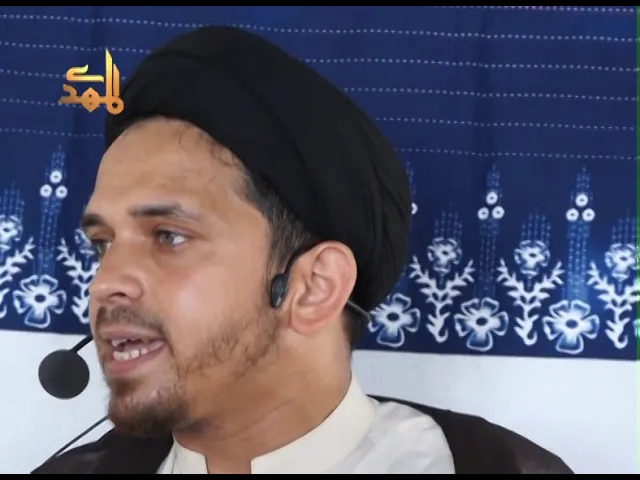
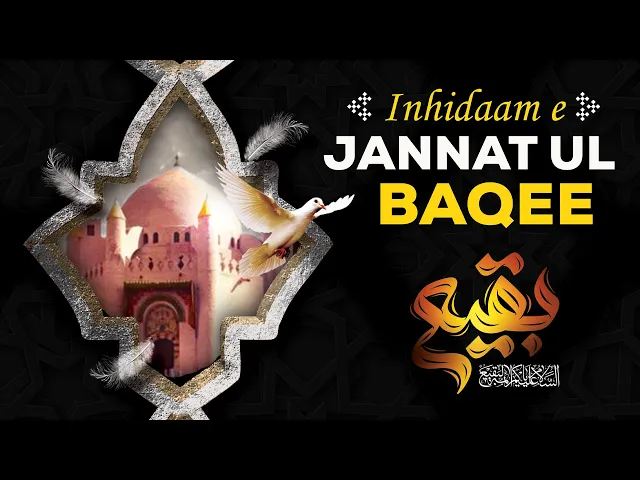
Remembering the Tragedy of Baqee
0
0
14 Bekeken·
24/08/10
Lecture by Dr. Usama Al-Atar
ISIA - Edmonton
www.jammat.org
Laat meer zien
Transcript
[0:01]Alhamdulillah.
[0:08][Music] [Applause] Father, [Music] Quran.
[0:52][Music] First of all, we would like to welcome our guest for
[1:33]visiting us today.
[1:35]Thank you very much for joining us.
[1:36]Like I mentioned a week ago approximately almost two weeks ago that
[1:45]this place is open anytime for people to come.
[1:51]It is a house of God open for people at any time
[2:00]these days.
[2:01]The early days of the month of Shaw, which is the month
[2:06]that comes after the month of Ramadan, coincide with a tragedy.
[2:15]And this tragedy is the demolition of the holy shrines of four
[2:25]imams, four divine leaders of the prophet Muhammad sallallahu alaihi wasallam in
[2:38]in the city of Medina in Hij which is today referred to
[2:47]as Saudi Arabia.
[2:52]The tragedy that took place about 87 or 88 years ago.
[3:02]We will take a look at this tragedy and we'll see if
[3:11]there are any essence to it or any basics to it.
[3:15]The verse that we described or we discussed or we read just
[3:20]the beginning says the one who reveres the signs of God.
[3:37]Then that stems from the heart.
[3:39]The piety stems from the heart.
[3:45]First of all, what are what are the signs of God?
[3:53]Second is the shrine of the holy prophet sallallah.ai one of the
[4:01]signs, one of the third would the shrines of or would the
[4:14]graves of be considered as the signs of God?
[4:16]Fourth, can we build shrines over the grave of the holy prophet,
[4:23]over the graves of fifth, what is our duty towards this sha
[4:31]or this sign?
[4:32]Five things inshallah we will cover over the period of the time
[4:38]that we have today before us.
[4:40]First of all, what are the signs of God?
[4:43]The one who reverses the signs of God.
[4:47]Now everything is a sign of God.
[4:50]Everything.
[4:51]When we take a look at for example the plants, a plant.
[4:57]This tree, take a look at a tree that is centuries old.
[5:00]If you go for example to certain forests, you'll find a tree
[5:06]that is gigantic.
[5:06]It people experts will tell you this tree is centuries old.
[5:11]This tree started from a seed.
[5:14]One little seed came and was planted into the ground.
[5:19]This tree grew.
[5:22]That seed developed and developed to become this gigantic tree for centuries.
[5:28]When a person looks at this, that's a sign of the presence
[5:33]and the existence of Allah subhana wa ta'ala, God Almighty.
[5:36]When a person take a takes a look at for example the
[5:42]animal kingdom taking a look at the bees for example or the
[5:45]ants and looking how organized they are what structure they have that's
[5:53]a sign of God that's an indication so what is the meaning
[5:58]here of the signs of God that are referred to here are
[6:03]the signs that are explicit signs of God.
[6:06]What do we mean by explicit signs of God?
[6:11]For example, places of worship like a masjid, a masjid, a mosque.
[6:18]When a person for example wants to seek tawa repentance a person
[6:27]who may have led let's say not a good life a life
[6:32]full of sins one day he wakes up he says you know
[6:33]what I have not been following the right path I want to
[6:37]go back to God where would a person go a person might
[6:39]attend the center a masjid a mosque a place of worship that's
[6:46]a clear sign an indication of Allah subhanaa The holy prophet sallall.aii
[6:54]wasallam is indeed a clear sign of Allah subhana wa tala when
[6:59]you think when you hear the name the prophet Muhammad sallallahu alaihi
[7:04]wasallam what do you think of what comes to your mind the
[7:09]religion of Islam comes to the mind a person with nobility where
[7:16]Allah tells him You have the best of morals and ethics and
[7:22]manners.
[7:22]A person who is a mercy to the universe.
[7:27]So everything that is points to where towards who?
[7:32]Towards Allah subhanana wa ta'ala.
[7:34]When you think of the prophet, he is a sign that leads
[7:38]you to Allah subhanahu wa ta'ala.
[7:39]He's a prophet of God.
[7:41]So that's a clear sign.
[7:44]So the holy prophet sallallahu alaihi is one of in fact he
[7:48]is the pinnacle of subhanahu wa ta'ala the peak because other than
[7:54]if we did not have the prophets if we don't have prophets
[7:56]then we don't even know how to worship Allah subhanana wa ta'ala
[8:00]sometimes we would not even recognize Allah subhana wa ta'ala god almighty
[8:05]has blessed us the humans by sending us prophets to teach us
[8:11]to guide us so they are the best of the Signs of
[8:12]Allah subhana wa ta'ala the signs of God the prophets and our
[8:19]prophet sallallahu alaihi is the pinnacle of all this so these are
[8:22]the signs of God our holy prophet is a sign of Allah
[8:28]subhana wa ta'ala second would visiting the prophet sallallahu alaihi wasall visiting
[8:36]his grave be a sign of Allah is that of and the
[8:39]answer is yes the answer is What do Muslims say about visiting
[8:47]the prophet's grave?
[8:51]It is narrated in the hadith from the holy prophet sallallahu alaihi
[9:00]wasall narrated by Omar.
[9:05]Omar narrates this hadith.
[9:14]Whomever performs and visits my grave after my death, it is as
[9:23]if he has visited me in my life.
[9:27]Same there's no difference whether I die and leave this world or
[9:34]whether I am alive.
[9:33]The sanctity of the prophet, the dignity of the prophet, the holiness
[9:38]of the prophet doesn't change.
[9:42]It doesn't die with him.
[9:44]If Allah describes a martyr, a Shahid as alive, what about the
[9:53]prophet of God?
[9:51]The prophet of God who guided this martyr, who taught him, he's
[10:01]not dead.
[10:03]This hadith is narrated by many many scholars in our school of
[10:10]thought.
[10:10]Also we have a similar hadith something along the similar line narrated
[10:13]in along the same lines with different wordings.
[10:20]So visiting the prophet is indeed a sign because whether you visit
[10:24]him alive or dead you're getting reward for it.
[10:29]When you visit when he's alive if you visit him you get
[10:36]do you get reward or not visiting the prophets the people at
[10:41]the time of the prophet the companions they used to go some
[10:44]of them and and love just to look at we have in
[10:53]some traditions that it is recommended to always be associated with with
[10:58]scholars.
[10:59]Why?
[10:59]Because scholars of religion they remind you of Allah subhana wa ta'ala.
[11:04]So that association with the with the scholars gains you rewards taw.
[11:08]What about association with the prophet sallallahu alaihi wasall being with the
[11:13]prophet.
[11:14]How many people their lives change just by looking at the prophet?
[11:18]So the same thing happens when he is dead as well.
[11:22]So that is with them with him with the holy prophet sallallahu
[11:25]alaihi wasall.
[11:26]So then is visiting him a sign of Allah subhana tala?
[11:29]Indeed the holy prophet his grave is a sign a clear sign
[11:36]of Allah subhana tala.
[11:35]And so we have to take care of that.
[11:40]Now that's what about would that apply to as well and yes
[11:52]it does.
[11:50]Yes it does.
[11:56]im the im of the right and the Muslims.
[12:04]He used to visit Im the shrine of Alam the grave of
[12:12]Imam.
[12:10]He used to go to visit him and what did he say?
[12:14]He used to say the following.
[12:27]the grave of is a far word.
[12:34]It's a special medicine.
[12:35]So he says it's it's a medicine.
[12:37]Visiting the grave of is a medicine for what?
[12:43]A tried tested medicine.
[12:46]Something that's tried and tested for what?
[12:51]uh to have your dua accepted.
[12:56]Not only should you visit his shrine but also pray there.
[13:00]Pray ask for your needs because your dua is accepted there.
[13:05]So when a person goes to visit the shrine of and prays
[13:11]there the shrine of the holy prophet sallallahu alaihi the shrine of
[13:16]and makes a dua he's not doing shik.
[13:19]He's not associating anyone with God.
[13:22]No, it is by the command of God.
[13:27]Allah subhana wa ta'ala says, "Seek the means to Allah, to God."
[13:33]What are the means?
[13:36]What are the means?
[13:39]The holy prophet, the prophets of God are the means.
[13:42]And our holy prophet, they are the means.
[13:46][Music] Hussein hadith of the prophet sallallah is the light of guidance.
[14:01]The light the light that can guide you in your lifetime and
[14:05]the means the safina the means that can take you to to
[14:13]what?
[14:17]that can save you.
[14:21]So not only one of the imams, one of the big followers
[14:29]and imams of Im Ahmed Ib of the Hab to whom many
[14:36]of the people in Hij follow.
[14:37]Many of them follow Im Ahmed Hal.
[14:40]One of their great leaders, a man by the name of Al
[14:48]Hassan Ibraim Abbal.
[14:50]This man was one of the grandm of Hanabah of Im Abuhanif
[14:59]Ahmed.
[14:59]He says, this is what he says.
[15:01]This is narrated by Alibadi Baghdad.
[15:05]He says the following.
[15:26]not a time that a matter came to me, some difficulty came
[15:33]to me.
[15:33]Every time a difficulty comes to me, this is the imam of
[15:40]the the leader, the muti, every time I experience a difficulty.
[15:45]So I turn to the grave of and I do through him.
[16:05]I seek his intercession.
[16:14]We seek your help.
[16:17]We seek your guidance.
[16:18]We seek your intercession.
[16:19]He says, "I went there.
[16:24]I go there and I seek his intercession, his but Allah subhana
[16:31]wa ta'ala with ease for me my difficulty and show me what
[16:36]I like.
[16:37]This is the imi.
[16:39]He goes to the grave of imul in the im.
[16:47]Now we ask this im of when you go to the shrine
[16:55]of Imam do you go there with intention of seeking Allah why
[16:58]do you go to him why do you go to Imam because
[17:03]he is a sign he's a clear sign a clear sign of
[17:09]the signs of Allah subhana wa ta'ala and hence you seek him
[17:12]you seek him so can we seek the shrines of Salam.
[17:18]Yes indeed.
[17:20]They their their leaders are doing it.
[17:22]Their leaders are doing it.
[17:27]So yes.
[17:29]Question four.
[17:29]Okay.
[17:30]So this is visiting their graves.
[17:32]What about building shrines?
[17:35]You build shrines.
[17:37]Some people might say, "Okay, this applies to their graves." Okay.
[17:41]Why do you build a shrine?
[17:42]That is not allowed.
[17:46]We say first of all let's turn to the Quran the holy
[17:55]book of Muslims the holy book of Muslims when it comes to
[17:59]the story of the people of the cave those brave individuals who
[18:11]had high posts in their governments Yet their leader, the king, he
[18:25]wanted to impose the belief in idols on everyone in the kingdom.
[18:31]Everybody has to believe in idols and has to denounce and disassociate
[18:37]any other religion.
[18:40]These individuals, they said, "No, we're not going to do that.
[18:44]Not only did they keep quiet, but they went vocal about it.
[18:50]They said, "We will not believe in this." So they left their
[18:53]high ranking posts, their highpaying salaries, their big families, their homes, everything.
[19:02]And they went out and sought refuge in a cave away from
[19:09]that tyrant king.
[19:12]And they were slept there.
[19:14]They kept there.
[19:13]God protected them for about 309 years.
[19:17]After which time Allah revived them, woke them up.
[19:22]They were asleep.
[19:21]309 years were sleeping.
[19:23]309 years they come back and the times have changed now.
[19:29]Three centuries later, times have changed.
[19:32]The king now has died.
[19:37]Another king came.
[19:36]Now it is a time of belief.
[19:38]Everybody is believing in God.
[19:41]That is the religion.
[19:42]Everyone believes in Allah subhana wa ta'ala and God Almighty.
[19:45]They come back then and these individuals go into the cave and
[19:50]never come back again.
[19:52]These people from the king's side, those believers when they go and
[19:57]see them, they say, "What shall we do now to them?
[20:01]What shall we do?
[20:03]Should we just leave them?
[20:05]Forget about them.
[20:06]Should we build build a monument for them?
[20:10]we'll just build a monument.
[20:12]However, God Almighty states in the Quran, he says, who had control
[20:33]of the affairs.
[20:34]Who had control of the affairs?
[20:36]The king, the believers.
[20:38]They're the ones who had control because now the city, the entire
[20:42]city has become Muslim or believers, submitters.
[20:45]So the whole city now believes in God.
[20:48]They are the ones who have the control.
[20:51]They said and he says he says the believers the believers they
[21:07]have the control.
[21:09]We will build a masjid a mosque over them.
[21:14]Not a monument a mosque a prayer place a masjid.
[21:20]And Allah refers to the massid the mosques as places of remembering
[21:23]God where God is remembered.
[21:28]Allah says in so places of worship.
[21:33]Allah subhana wa ta'ala says this is what they decided.
[21:38]The believers decided to do that and Allah did not comment on
[21:40]their decision.
[21:41]Did not say that this was a bad decision.
[21:44]This was something wrong otherwise Allah would have commented.
[21:47]No.
[21:48]So what they have done is something right.
[21:52]They build a mosque, a place of worship over them.
[21:55]But who do they worship?
[21:58]Not those individuals.
[21:58]They worship who?
[22:01]Allah subhana wa tala.
[22:02]You go to any of the shrines of I challenge the Muslims
[22:11]to go to the shrines.
[22:14]Find every individual who's praying in these shrines.
[22:18]Where is he or she facing where does he face?
[22:23]Do you find anyone anyone when he prays salat faces the shrine
[22:32]itself the haram itself the itself?
[22:34]Never.
[22:35]Millions of people visit these shrines.
[22:37]Go see go see for yourself before you start accusing people.
[22:43]Go see experience firsthand.
[22:49]That's one.
[22:51]The second the scholar who the followers in they love him.
[23:01]This is like the the grandmaster for those guys.
[23:05]Every time they quote him, they quote him because this man had
[23:10]the legit beliefs.
[23:11]He states in one of his books, the book called he calls
[23:20]it, I don't know if it's really, but nonetheless, he says when
[23:30]Jerusalem when Muslims entered Jerusalem, this was during the time of the
[23:35]second Khalifa, the second Khalifa of Muslims, Muslims entered into Jerusalem.
[23:47]the prophets who are buried in Jerusalem.
[23:49]Many prophets are buried in Jerusalem.
[23:51]That's a very holy place.
[23:52]It's a holy place for all believers of all the Abrahamic faiths,
[23:58]for Jews, for Christians, and for Muslims.
[24:01]That place is very holy.
[24:02]It contains the graves of many prophets.
[24:05]Many prophets are buried in that place, in that holy place.
[24:09]Dawisam for example is buried in that place.
[24:13]Dawisam Ibraimisam is buried in there.
[24:17]Many prophets are buried there.
[24:21]So it's a holy place.
[24:22]And these prophets had shrines had shrines.
[24:25]So he says when Muslims entered there into Jerusalem, there were many
[24:32]prophets who were buried there and had shrines.
[24:35]And then however he said he comments, He said, "However, the doors
[24:45]of these shrines were locked until the fourth century after death, fourth
[24:49]Islamic century, that's when they opened the doors and people started entering
[24:52]these shrines." The second Khalifa, if having the shrine is something is
[25:02]something that's forbidden in religion, he would have destroyed it.
[25:05]He didn't.
[25:07]The third Khalifa didn't do anything about it.
[25:10]The Caiffs of Banaya didn't do anything about it.
[25:14]The Calebs of Ban Abbas didn't do anything about it.
[25:18]For a thousand years, the scholars, the the Caiffs, the leaders, they
[25:26]didn't do anything about it.
[25:27]So for a thousand years, after 1,000 years, after a thousand years,
[25:35]there comes this man who says, "No, you have to destroy these
[25:39]shrines.
[25:40]This is wrong." So we ask this man, this individual.
[25:43]And you are the only person who understood Quran.
[25:48]You're the only person who understood the Sunnah of Sai after a
[25:52]thousand years.
[25:53]Everyone before you did not understand the Quran nor did they understand
[25:56]the sunnah of Sah.
[25:59]You were the only one.
[26:01]And then he says this is haram.
[26:02]This is forbidden.
[26:05]You should not be visiting where so.
[26:09]So yes you can build the shrines.
[26:14]And then number five what is our responsibilities?
[26:18]Allah says, God Almighty says and one that is the one who
[26:26]reveres the signs of God rever them.
[26:32]How do we revere them?
[26:34]What is the reverence here?
[26:35]We have responsibilities there.
[26:38]We have duties to perform.
[26:45]One, visiting them.
[26:44]Visiting them.
[26:48]If a person does not visit the shrines of then he hasn't
[26:55]done reverence to them.
[26:55]We have a hadith narrated from the holy prophet sallallahu alaihi wasall
[26:59]whomever performs hajj and does not visit me after performing his hajj.
[27:08]He has not paid his respect to me.
[27:11]He has not given me his respect.
[27:16]You've come all the way for Hajj the pilgrimage and then you
[27:18]don't take that extra you know few hundred kilometers to come and
[27:21]visit the prophet don't come to visit me you haven't given me
[27:29]respect respect me so the visitation of is important that's one way
[27:37]of doing the the reverence and especially of all the imams but
[27:45]the imam.
[27:45]We need to constantly remind ourselves of the tragedy that happened there
[27:50]in Baky, the destruction of the holy shrines.
[27:53]In one of the lines of the towards the end of it,
[28:00]in one of the lines it is said, I have come to
[28:13]you.
[28:15]When the people of left you, I have come to you, oh
[28:21]children of Allah, when people have forgotten about you, they have neglected
[28:34]the signs of God, they are the the masters, they are the
[28:37]the biggest signs of God.
[28:41]I have come to you.
[28:41]I have done your z.
[28:45]So doing the z of the visitation is extremely important.
[28:48]That's one.
[28:51]Two, we need to remember the tragedy of to remember it these
[29:06]coming few days.
[29:10]Many nations will be remembering the tragedy of September 11th.
[29:18]It's coming to the 10th tragedy or 10th anniversary where many innocent
[29:28]lives were killed, people were killed.
[29:34]It's a tragedy.
[29:40]We need to also remind people that we suffered many tragedies by
[29:47]the same people who carry the ideologies who are said to have
[29:54]carried these attacks in September 11th.
[29:56]We have suffered a lot as well.
[30:01]Over 80 years ago, they've destroyed the shrines of our holy sites.
[30:06]But the world kept silent.
[30:11]No one said a word.
[30:10]When we cried, nobody listened.
[30:15]The same people, those people who were behind these attacks 10 years
[30:21]ago, they went into Afghanistan where some of the from that country,
[30:27]they tell me that thousands of people who follow were killed, thousands
[30:32]of Shia, Muslims were killed by these individuals.
[30:37]And the world kept silent.
[30:40]When we cried, we said, "Here is a problem.
[30:43]We have to turn to this problem and fix it, deal with
[30:48]it.
[30:49]The world kept silent.
[30:54]But when 9/11 happened, people started saying, "Ah, now we have a
[30:59]threat to our security.
[31:02]Now we have a threat.
[31:04]For eight years, we've been crying that there is a threat.
[31:08]And nobody's been listening to us.
[31:12]Why wait until this tragedy?
[31:15]Now the tragedy happened.
[31:17]Okay, people are writing about it.
[31:20]People are talking about it.
[31:24]We also have to write about the tragedy of the tragedy of
[31:30]we say that we don't accept what happened in September 11th but
[31:35]we also don't accept what happened 80 years ago or over 80
[31:40]years ago in many Muslims follow the religion of peace promote peace
[31:49]but we have a small group of individuals who carry ideologies that
[31:55]are not accepted by the majority of Muslims.
[31:59]Not the books of a hadith accept it.
[32:02]Not does the holy Quran accept it.
[32:06]Their imams themselves used to visit these shrines and not accept their
[32:10]ideologies.
[32:10]The imams the leaders whom they follow or they claim to follow
[32:15]small group of individuals.
[32:19]Yet these individuals are the ones who always make the headlines.
[32:24]We need to explain to people that we as Muslims don't agree
[32:31]with what those individuals are doing.
[32:33]Just few last week some of you may have heard the news.
[32:35]Last week the prime minister of this country said that there's a
[32:39]threat a threat from within this country.
[32:43]This is the prime minister.
[32:45]A threat from within this country.
[32:49]Muslims pose a threat these extremist ideologies.
[32:56]Many about a month ago or so back or two months ago
[33:03]back in July I discussed with you brothers and sisters a lecture
[33:07]that's found online.
[33:06]You can go to it about Muslims sharing the Canadian values.
[33:14]What are the Canadian values?
[33:18]I actually went through them and I went, you know, freedom of
[33:21]speech, freedom of expression, freedom of religion and I went through them
[33:25]and I said how Muslims, how our prophet sallallahu alaihi how the
[33:31]divine successor to the holy prophet, howam applied these long before the
[33:38]Magna Carta.
[33:39]You know the Magna Carta is what they say that the constitution
[33:45]of Canada is based on that treaty from centuries ago before that
[33:49]long long before that our prophet our religion a pro our prophet
[33:55]said you don't want to become a Muslim no compulsion in religion
[34:01]your choice he takes control of Mecca and he says I will
[34:05]not impose this religion upon anyone anyone who wants to become a
[34:07]Muslim come you Don't we respect that?
[34:11]Let's live in peace.
[34:16]That's it.
[34:15]Now comes a small group of individuals who create problems and now
[34:19]we give this to everyone.
[34:23]We brand everybody as a source of difficulty and terror.
[34:29]We can write we should write about this that we have been
[34:36]as Muslims we have been disassociating ourselves from such individuals and this
[34:41]group more than 80 years ago for centuries now we've been talking
[34:44]about this issue.
[34:47]So writing about this is important.
[34:53]Remembrance of this issue in terms of talking about it, mentioning it.
[35:03]May Allah bless the individual who looks after the website of this
[35:08]center.
[35:07]He's put it on the first page on the website.
[35:09]That's good.
[35:11]How many of us have looked at the picture of the when
[35:13]before they destroy it?
[35:16]Many people have not.
[35:17]They don't know what it looks like.
[35:18]Take a look at it.
[35:20]Take a look at the picture.
[35:21]See what it looks like before.
[35:22]That's what it should be like today.
[35:27]But unfortunately, it's been destroyed.
[35:30]talking about it, remembering doing the z for the especially these are
[35:40]all mandates that we have to follow because in doing so then
[35:47]we are doing reverence to the of Allah the signs of god
[35:50]we're respecting them we're giving them dignity imagine brothers and sisters may
[35:55]god forbid but imagine if someone comes and destroys your house.
[36:00]Your house, God forbid, how would you feel about that?
[36:06]How would you feel?
[36:08]Now, this is the shrine of who cares about my house compared
[36:16]to theirs.
[36:15]These are the individuals whom God has blessed us with that they
[36:21]have guided us to the straight path.
[36:23]We have to revere them.
[36:27]So these are many factors that we can try to the best
[36:32]of our abilities.
[36:34]Every one of us should think see what is the best of
[36:36]my ability.
[36:37]Can I write?
[36:38]Then I should write.
[36:38]Can I speak to people about it?
[36:40]Then I should speak to people about it.
[36:41]I can put it in a website.
[36:42]I'll put it in a website.
[36:45]I can at least do the visitation.
[36:46]Let me at least do the visitation.
[36:49]And so this will keep this memory alive.
[36:54]Memory alive.
[36:56]We pray to Allah.
[36:57]wa ta'ala to grant us the ability to visit the holy shrines
[37:04]of especially that the season of hajj is coming soon.
[37:09]We pray to God Almighty to bless us to visit the holy
[37:15]house and then visiting our holy prophet sallallahu alaihi wasallam and the
[37:22]imams and we pray to God Almighty to bless us to be
[37:27]among those individuals who reveal his signs.
[37:31]Raise your hands for the dua brothers and sisters.
[37:35]It is the eve of Friday this holy night when inshallah the
[37:41]prayers are accepted especially that we have a m who's ill and
[37:48]people have requested to pray for him inshallah he's undergoing a surgery
[37:52]brother Muhammad father Muhammad for him and many other individuals who are
[38:00]also suffering may Allah subhana wa ta'ala through the blessings of the
[38:05]im of grant them quick recoveries and fulfill our raise your [Music]
[38:25]hands.
[38:31][Music] [Music] foreign.
[38:54]Allah [Music] Ya Allah.
[39:08]Ya Allah.
[39:11]Ya Allah.
[39:10]Ya Allah.
[39:14]Ya Allah.
[39:18]Ya Allah.
[39:14]Ya Allah.
[39:16]Ya Allah.
[39:18]Ya Allah.
[39:20][Music] [Music] All Allah Allah.
[40:01][Music] [Music] Allah foreign.
[40:35][Music] [Laughter] [Music] Allah.
[41:37][Music] [Music] Ya Allah.
[41:59]Allah.
0 Comments
sort Sorteer op
- Top Reacties
- Laatste Reacties
Volgende
7 Bekeken · 25/11/04
16 Bekeken · 24/07/18
47 Bekeken · 24/08/10
21 Bekeken · 24/08/10